Why read novels? via Dynomight
Love this -> https://dynomight.net/novels/
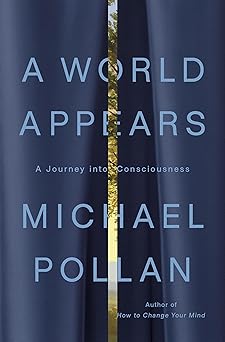
Pollan has a rare talent. He goes beyond journalism into something harder to name — a deep, patient synthesis of science, history, and lived experience that makes even the most tangled topics feel useful and graspable. He did it with food in The Omnivore’s Dilemma. He did it with drugs. And A World Appears is him doing it with the biggest, strangest question of all: what is it actually like to have a mind?
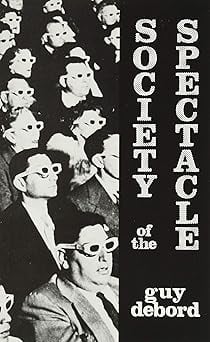
Debord’s central argument is that the “spectacle” goes well beyond what most of us picture when we hear that word — the Super Bowl, the Olympics, a presidential election. He argues that any representation of the world that turns people into passive spectators qualifies.
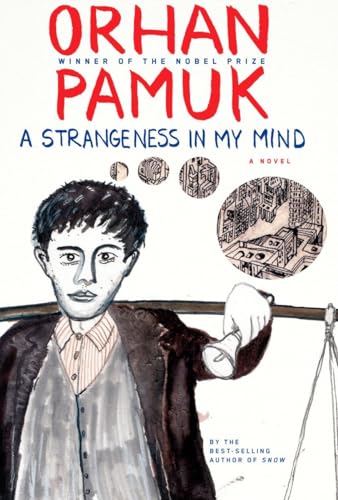
A Strangeness in My Mind by Orhan Pamuk is one of the Top 5 best novels I’ve ever read.
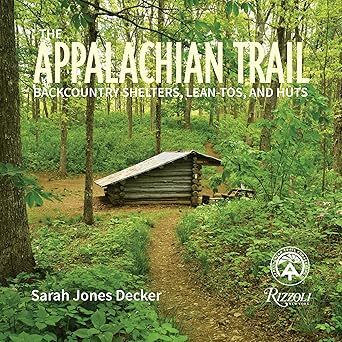
Sarah Decker went out and photographed and documented every single shelter on the Appalachian Trail — all 2,200 miles of it. The result is a beautiful, deeply niche reference book that, for the right reader, is an absolute treasure.
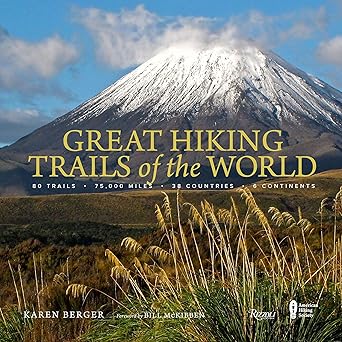
Great Hiking Trails of the World by Karen Berger is a coffee table reference book put out by Rizzoli. I’ve collected nine of these Rizzoli books now, and they’re all lovely — the kind of thing you keep on the coffee table not as decoration but because you actually flip through them.
Pagels is one of the original researchers of the Nag Hammadi manuscripts and a lot of the Coptic and Gnostic texts that scholars are still working through today. She’s been doing serious, primary-source work in this space for decades. I did not know she was still actively publishing so it’s genuinely impressive to see her add another strong book to an already massive bibliography.
The premise is straightforward: if history happened in real places, you can go stand in those places. And when you do, history stops being a mental movie and starts feeling like what it actually was — real people, real terrain, probably a lot more boring and weird than your imagination gives it credit for.
I picked up the Gospel of Thomas recently while working through Diarmaid MacCulloch’s Christianity: The First Three Thousand Years. I hadn’t read the Gospel of Thomas in a very long time, and MacCulloch’s treatment of the early church controversies reminded me just how much insight this text provides.
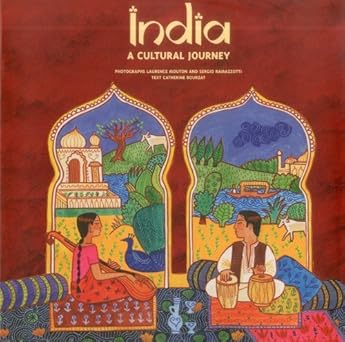
India: A Cultural Journey is a coffee table reference book — large-scale photography paired with written context at the opening of each chapter. It’s not a history. It’s not a travel guide. It’s more of a visual immersion into what India looks and feels like culturally.
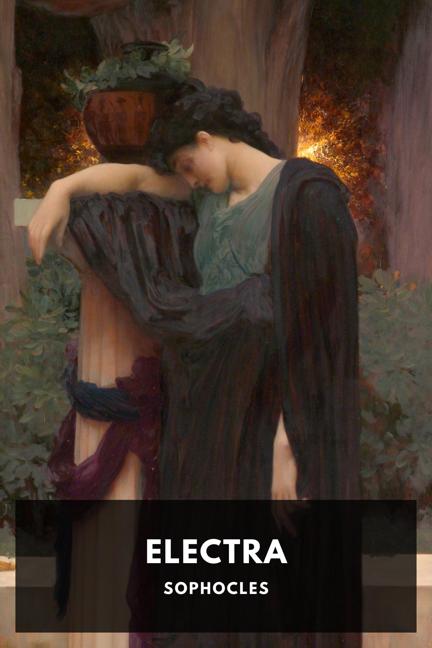
Electra follows the family of Agamemnon after the Battle of Troy — specifically his daughter Electra, who is consumed by grief and rage over her father’s murder and her desire for justice.
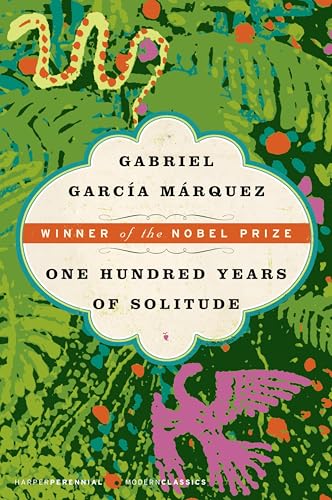
I picked this one up at the library with a pretty specific checklist in mind: I wanted a long novel, a Latin American novel, and something with a thread of magical realism running through it. I already love the way magical realism shows up in Haruki Murakami, and I’ve always had a soft spot for Southern Gothic — so a book that pulls both of those threads into a sweeping multigenerational epic seemed like it would check every box.
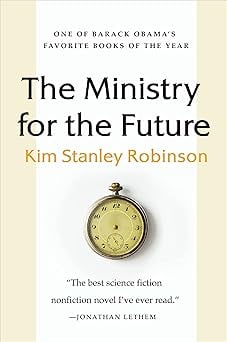
The Ministry for the Future is one of the better science fiction novels about climate change that I’ve read. It’s fast-paced, well-written, and grounded in realistic scenarios. The setting works. The characters work. The whole thing works.
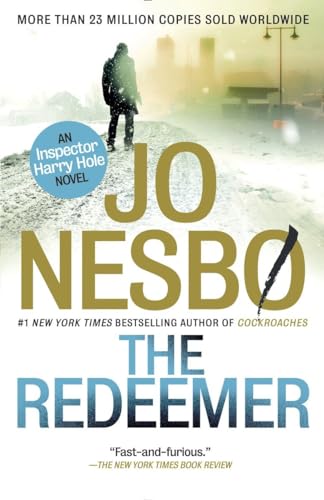
The Redeemer is not Nesbø at his absolute best, but “not his best” for Nesbø still means it’s a very good book. The plot pulls Harry Hole into the world of the Salvation Army, a contract killing, and a web of secrets that gets darker the further in you go.
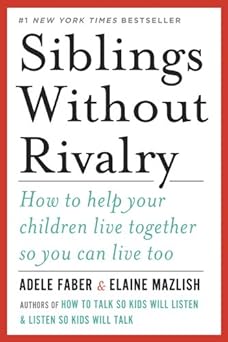
If you’ve read How to Talk So Kids Will Listen & Listen So Kids Will Talk (also by Faber), you already know the format: real-world scenarios, illustrated examples, and a very practical, non-preachy tone. Siblings Without Rivalry follows the same approach and lands just as well.
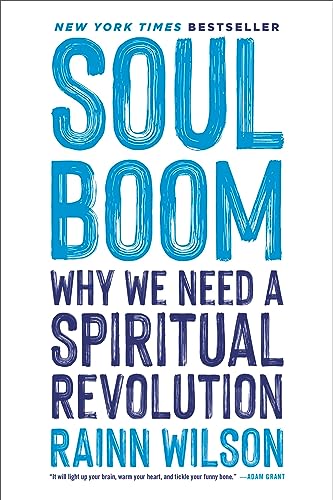
I stumbled across Rainn Wilson’s podcast Soul Boom the way I stumble across most things I didn’t know I was interested in — serendipitously. One episode led to another, and after just a few episodes I had a decent sense of what he’s been up to since The Office wrapped. The short version: he’s been on a genuine, years-long mission to make big philosophical and spiritual questions feel normal to talk about. Soul Boom is the book version of that mission.
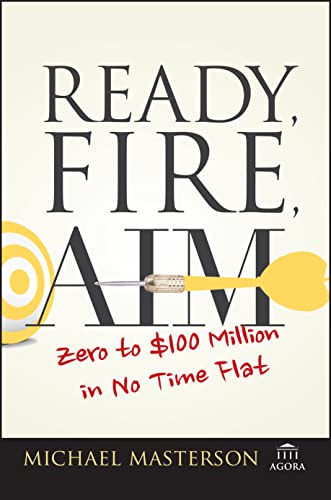
Back when I was a freshman in college, I picked up Ready, Fire, Aim by Michael Masterson (a pen name) while falling down a very specific rabbit hole — the world of 1980s South Florida hustle-culture business people. Mail order, media, direct response marketing. Not exactly the role models section of a business school syllabus. But it’s one that I picked up – and stuck with me.
Click by Ori and Rom Brafman is a fun, fast little pop science book about why some relationships just…click. Why do some people go from strangers to fast friends in an afternoon while others stay awkward acquaintances for years?
I pulled Notes on the Death of Culture by Mario Vargas Llosa off a library shelf somewhat serendipitously after reading…
Lands of the Western National Forests by Robert Mullenbach is a directory-style reference book covering the national forests west of…
How to Read Water by Tristan Gooley is the third book in his natural navigation trilogy, alongside The Natural Navigator…
The Natural Navigator by Tristan Gooley is part of a trilogy — alongside How to Read Water and How to Read Nature — and the whole series is about learning to read the world around you rather than a screen in your hand.
How to Read Nature is the third book in Tristan Gooley’s nature-reading trilogy, alongside The Natural Navigator and How to…
The premise of Wealth Ladder is deceptively simple: the rules of personal finance depend on what wealth tier you’re currently in.
I picked up The Best American Short Stories 2015 at a used bookstore sale. The price was right, the premise was appealing – a curated collection of the best short fiction published that year – and I’ve always been curious about the short story as a format.
I picked up Ilustrado by Miguel Syjuco for the same reason I pick up most literary fiction I know nothing about — it won a pile of awards and the setting intrigued me. A murder mystery that opens in New York City and winds its way back to Manila? That sounded like exactly the kind of ambitious, globe-spanning novel I’d enjoy.
Sacred Places of a Lifetime by National Geographic is an excellent coffee table style reference book showcasing some of the great sacred places around the world.
The Complete Stories is the only collection that includes every short story Flannery O’Connor ever wrote — including “The Geranium,” which she submitted as part of her master’s thesis at the Iowa Writers’ Workshop. If you’re going to read her, this is the one to get.
A Roundup of My Favorite Books About Trees and Forests…so far.
I don’t usually read best-selling political books of the moment. They feel too tied to whatever news cycle is happening right now, and I’d rather read something that has aged a bit.
But it feels like we’re at a genuine inflection point in American politics. The party coalitions that formed in the late 60s and early 70s—now going on 50 years old—are breaking down.
Consolations is a collection of short essays and poems. Each entry is just a page or two—a few hundred words at most. But Whyte packs an incredible amount of meaning into that small space.
I picked this book up after hearing the author interviewed on a podcast — and by “picked up” I mean it was on sale on Amazon and seemed worth a quick read.
A Roundup of My Favorite Books on Religious Violence…so far.
I picked up The Discourses by Epictetus from Standard Ebooks, then ended up buying the print Penguin edition as well. Stoic philosophy has had waves of popularity over the years, and I love that the most recent wave has brought a blossoming of new translations, resources, and accessible texts.
A Roundup of My Favorite Books on Urban-Rural Divides…so far.
The core premise is straightforward: humans create stories and frameworks that aren’t literally true, but are still incredibly useful. Not useful in a “white lie” kind of way. Useful in a “this is how civilization actually functions” kind of way.
A Roundup of My Favorite Philosophical Novels…so far.
A Roundup of My Favorite Books on Urban Wildlife…so far.
I picked up America’s Great Forest Trails by Tim Palmer after seeing it on a shelf at my local bookstore. It’s a coffee table reference book highlighting America’s great forest trails—of which we have thousands and thousands of miles.
A Roundup of My Favorite Books on Modern Africa…so far.
A Roundup of My Favorite Books on Personal Identity…so far.
A Roundup of My Favorite Haruki Murakami Novels…so far.
A Roundup of My Favorite Books on Wilderness Navigation…so far.
Deep Tech by Pablos Holman is a book by one of the most perennial hard tech entrepreneurs in America. Holman is known for his work at Blue Origin and Intellectual Ventures, and he currently runs a venture capital firm focused on what he calls “hard tech” — using technology to solve problems in the physical world rather than in the software or digital world that has been the focus of Silicon Valley for so long.
How to Read the Bible by Harvey Cox is an accessible, nuanced, and genuinely creative introduction to engaging with the best-selling and most influential single book in the world.
The Elephant Vanishes is a short story collection by Haruki Murakami, and it’s one of his best. I’m generally a…
This Dark Road to Mercy is another memorable novel from Cash. Without getting into too many spoilers, the book follows two young sisters in 1990s North Carolina who find themselves on the run with their estranged father. It’s a tense, propulsive story that weaves together themes of family, poverty, and redemption against the backdrop of Appalachian culture.
A Roundup of My Favorite Books on Islamic History and Culture…so far.
A Roundup of My Favorite Books on Farming and Agriculture…so far.
A Roundup of My Favorite Books on Arctic and Northern Exploration…so far.
A Roundup of My Favorite Books on Hiking and Outdoor Adventures…so far.
A Happy Death by Albert Camus is essentially a prequel to The Stranger — and it’s best understood that way.
A Roundup of My Favorite Books on Pakistani and Indian Life…so far.
A Roundup of My Favorite Lawrence Osbornes Asian Fiction…so far.
Sometimes a name shows up everywhere in the same week. That happened to me with Paul Tillich. His name popped…
I picked up Dynamics of Faith at a used bookstore along with The Courage to Be — same author, same…
A Roundup of My Favorite Crime Fiction Set in Scandinavia…so far.
A Roundup of My Favorite Books on Sustainable Living and Environmentalism…so far.
The Myth of Sisyphus and Other Essays by Albert Camus is one of those books I’ve read a couple of times and finally just decided to own. I picked up the Vintage Books edition specifically because it includes bonus essays — particularly “Summer in Algiers” — that I think represent some of Camus’s best work.
The core premise of antimemetics is deceptively simple: we live in an age where ideas spread faster than ever, and yet some ideas don’t spread at all. Not because they’re obscure or unimportant — but because of something specific about their nature.
Asparouhova calls these antimemes.
Camping Georgia by Jimmy Jacobs is a Falcon Guide focused on finding good tent camping spots at established campgrounds throughout Georgia.
I picked up Tribe of Mentors by Tim Ferriss after getting so much value from The 4-Hour Work Week. That book did an excellent job helping me reframe and understand the world of business and productivity, so I figured this would be another solid read.
A Roundup of My Favorite Books on The American West…so far.
I picked up Jesus and the Disinherited by Howard Thurman after a weekend that included visiting the Martin Luther King…
A Roundup of My Favorite Books on Global Economics…so far.
A Roundup of My Favorite Books on Asian Culture and History…so far.
I Am a Strange Loop by Douglas Hofstadter is possibly one of the best science books I’ve ever read — even though I’m not entirely sure I understood half of it.
I picked up The Human Condition because I thought Hannah Arendt might have something useful to say about living in…
A Roundup of My Favorite Books on Self-Experimentation…so far.
I picked up Oedipus Rex as part of reading through the Theban trilogy. I was browsing Standard Ebooks and the collection caught my eye. I hadn’t read it since a required literature class in college, so I figured it was time to revisit and see how it held up.
A Roundup of My Favorite Books on Entrepreneurship and Business Strategy…so far.
The First Man is the manuscript that was found at Albert Camus’s side after his death in a car accident in 1960. It sat unpublished for decades — held back by his estate, his daughter and granddaughter — before finally being released to the public.
A Roundup of My Favorite Books on Media Criticism…so far.
A Roundup of My Favorite Books on Family Dynamics…so far.
A Roundup of My Favorite Books on Behavioral Economics…so far.
I read Antigone by Sophocles after finishing Oedipus Rex. Both are part of the Theban Trilogy, which I grabbed from Standard Ebooks.
The Network State by Balaji Srinivasan is a book I picked up mainly because my work is tech-adjacent, and for a while this book was everywhere among the tech elite. Even though it seemed ridiculous on the cover, I wanted to understand what my peers were paying attention to.
I picked up Oedipus at Colonus from Standard Ebooks as part of the Theban Trilogy, along with Antigone and Oedipus Rex.
A Roundup of My Favorite Books on Global Travel Adventures…so far.
A Roundup of My Favorite Post-Apocalyptic and Dystopian Fiction…so far.
I picked up Behave out of frustration. The popular discourse around brain chemistry had gotten to be too much. Dopamine…
A Roundup of My Favorite Books on Personal Finance Strategies…so far.
Perkins may have had more direct impact on the everyday lives of ordinary Americans than almost anyone else in the 20th century. The 40-hour work week. The minimum wage. Social Security. Child labor laws. Unemployment insurance. These aren’t abstractions — they are the literal architecture of how Americans work, save, retire, and survive hard times. Frances Perkins built most of that architecture.
That was a serious underestimate.
I’ve read the entire Sherlock Holmes canon. He’s my favorite mystery character, and I’ve worked my way through every story…
A Roundup of My Favorite Books on Internet Economics…so far.
Superbloom by Nicholas Carr is the latest book from the author of The Shallows and The Glass Cage. It’s about how technologies of connection tear us apart—or more precisely, how they scale up both the best and worst of human nature to unprecedented heights.
A Roundup of My Favorite Books on Sports Business…so far.
A Roundup of My Favorite Books on Real Estate and Housing…so far.
A Roundup of My Favorite Books on Faith Perspectives…so far.
A Roundup of My Favorite Books on Historical Conflicts…so far.
A Study in Scarlet is really two completely separate stories. One takes place in Victorian London with Holmes and Watson investigating a murder. The other takes place in the American West—Utah, specifically—decades earlier.
The Ultimate Hiker’s Guide by Andrew Skurka is the best backpacking book I’ve ever purchased. Not the most inspiring. Not the most beautiful. The best.
A Roundup of My Favorite Books on Global Economic History…so far.
How to Have Impossible Conversations: A Very Practical Guide by Peter Boghossian and James Lindsay is a book I picked…
A Roundup of My Favorite Books on Northern Europe and Scandinavia…so far.
I picked up American Philosophy, A Love Story after reading Kaag’s earlier book Hiking with Nietzsche and coming across several of his essays in The Atlantic. John Kaag is, in my opinion, one of the most talented working writers who also happens to be an actual practicing professor of philosophy. That combination — the rigor of the academic and the accessibility of a great essayist — makes him worth following closely.
I picked up Hiking with Nietzsche after reading John Kaag’s book on American philosophy. He’s a fabulous writer who uses personal anecdotes to weave deeper, more modern, and more personal connections to big philosophical ideas.
A Roundup of My Favorite Books on Human Rights and Justice…so far.
Tobacco Road follows the desperate lives of the Lester family, poor white sharecroppers struggling to survive in Depression-era Georgia. The novel’s unflinching portrayal of poverty and moral degradation shocked readers when it was published in 1932, sparking controversy while highlighting the harsh realities of rural Southern life.
A Roundup of My Favorite Books on Maritime and River Exploration…so far.
*like, sometimes I publish…a lot :O – though you can pick what categories you want.
Ahh…I see you’re up for some extra inconvenience. Some Type 2 Internet Fun, if you will. Well then! Follow me with your favorite Fediverse app or server (e.g., Threads, Mastodon, Pixelfed, etc).