The Philippines by Lonely Planet

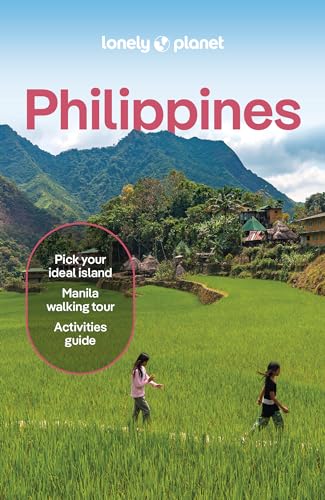
I grew up in the Philippines. I last visited about 20 years ago.
So when I saw the latest Lonely Planet Philippines on the shelf at my local library, I picked it up on a lark. Part of it was practical – I want to get back there in the next few years and figured I should start thinking about it. But the bigger reason was that I wanted to see how the country has changed, and specifically how domestic tourism has changed.
I got both. But I also got an argument I wasn’t expecting to make about guidebooks in general.
What I Liked
The Old Criticism of Guidebooks Is Now Backwards
The classic knock on Lonely Planet was that it concentrated crowds. Name a beach in a guidebook, and every backpacker in the hemisphere shows up at that beach. Print the recommendation, ruin the place.
That criticism made sense in 1998.
In 2026, TikTok and Instagram have concentrated crowds on the trendiest, most photogenic places in ways that a guidebook could never have dreamed of. Boracay got so overrun that the government closed the island for six months to clean it up. No guidebook has ever done that to a place.
So I think we’re circling back around to a world where a good guidebook actually spreads crowds out.
Not because it avoids naming specific places – it names plenty. It’s because of what happens when you flip through it. A guidebook introduces you to regions, activities, and cultural ideas that you didn’t know you didn’t know. An algorithm shows you more of what you already clicked on. A book shows you the whole country, including the 80% of it that will never trend.
And once you’ve seen a thing exists, you notice it. If you’re a surfer and you had no idea the Philippines had surf, you’ll notice the surf. Same goes for history, architecture, food, birding, or stuff to do with kids.
Here’s what it did for me. When I was there, the Aurora region on the Pacific coast of Luzon was extremely underdeveloped with very few ways to get around. There’s development around their protected national park, real destinations, and actual tourist amenities. Same story across a lot of islands that were basically working sugarcane plantations with no infrastructure in the ’90s – Negros and Iloilo have both developed a lot, and so has Mindoro over on the other side.
That’s good news, and not just for those places. Every traveler who ends up in Negros is a traveler who isn’t adding pressure to Cebu or Boracay.
That’s the case for the guidebook in 2026. Flip through one and you get a genuine sense of a country and a bunch of unique ideas about how to experience it. Lonely Planet and DK both still do this well. Still worth the paper they’re printed on.
The Cultural & Historical Notes Are Concise Because They Have To Be
The other thing I enjoyed was the history and culture writing – and specifically how it was written.
A book about Filipino culture can take 400 pages and wander wherever it wants. A guidebook has a sidebar and 200 words. That constraint makes the writing clear and concise in a way that a dedicated culture book almost never is.
I got a genuinely useful refresher on Philippine history, food, transportation, and daily life. As someone who grew up there, I can tell you it’s accurate. It’s compressed, but it’s not wrong, and it’s not the flattened tourist-brochure version of the country either.
What I Didn’t Like
Not a whole lot, and the two things I’d flag are both features of the format rather than failures of the book.
First, concise writing cuts both ways. The same editing that makes the culture notes readable also means you’re getting the outline. If a sidebar catches your interest, you’re going to need another book.
Second, print timelines. Even the most recent edition is describing a country that keeps moving, and the developing regions – exactly the ones I found most interesting – are the ones most likely to have changed since it went to press. Treat the specifics as a starting point, not gospel.
Takeaway
Worth picking up. Get it from the library first like I did – flip through the whole thing, not just the chapters for where you think you’re going. That’s the entire point.
A review of the latest Lonely Planet Philippines, picked up from the library by someone who grew up there and hasn't visited in 20 years. The book prompts an argument that guidebooks now spread crowds out rather than concentrate them, since TikTok and Instagram funnel travelers to a handful of trending spots. Also covers how Philippine domestic tourism has developed beyond Cebu and Boracay.
- Introduces regions and activities you didn't know existed, which disperses tourist pressure instead of concentrating it
- Cultural and historical notes are clear and concise because the format forces them to be
- Accurate on Philippine history, food, and daily life, without flattening the country into a brochure
- Print editions go stale fast, especially for the developing regions that are most worth reading about

Get Posts Automagically
…also via RSS or Fediverse – just copy link & paste in your favorite reader :)


