100 Years of Solitude by Gabriel García Márquez

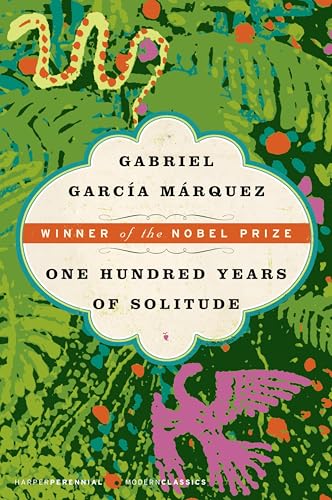
I picked this one up at the library with a pretty specific checklist in mind: I wanted a long novel, a Latin American novel, and something with a thread of magical realism running through it. I already love the way magical realism shows up in Haruki Murakami, and I’ve always had a soft spot for Southern Gothic — so a book that pulls both of those threads into a sweeping multigenerational epic seemed like it would check every box.
It definitely did.
What I Liked
The imagery is extraordinarily rich. The setting in Colombia feels perfect — not just as a backdrop but as something that breathes alongside the story and sets the entire tone and atmosphere of the novel.
The plot reminded me of East of Eden by John Steinbeck — that same kind of multigenerational drama where each generation echoes and distorts what came before it. Except García Márquez turns up the heat on every element: the passion, the violence, the absurdity, the beauty.
The magical realism absolutely delivers. It’s not decorative. It’s woven into how the characters understand the world, which makes it feel more like truth than fantasy.
And I’ll stand by this: 100 Years of Solitude is the Western Hemisphere’s answer to Dostoevsky and Tolstoy. It belongs in that conversation — a novel that works on the level of grand human tragedy and on the level of a single family’s deeply specific, deeply strange existence.
I also came away with the strong feeling that I need to read it again. There’s so much going on beneath the surface that a single read barely scratches it. Honestly, I wish I had read it after ChatGPT and Claude got really good — there are passages where I would have loved to dig in with someone and ask “wait, what is actually happening here?” instead of just pushing through.
What I Didn’t Like
The names. This is the same complaint I have about Russian novels, and it applies here in full force. Everyone in the Buendía family shares the same names — cycling through the same few across generations — and unless you’re a native Spanish speaker or a much more experienced reader of literary fiction than I am, it creates real confusion. It definitely affected the reading experience, especially in the back half of the book.
Related to that: the novel is dense with literary allusions, and I know I missed a lot of them. I don’t necessarily hold that against the book — that’s on me and the gaps in my reading history. But it’s worth flagging for anyone going in. When you read something that’s clearly in conversation with centuries of literature and you’re not fluent in that conversation, you feel it.
And one thing I genuinely did not expect: the book is graphically violent in places. Not gratuitously so — it fits the world — but it’s jarring if you go in thinking it’s purely lyrical and dreamlike.
Final Take
100 Years of Solitude lives up to the reputation. It’s one of the greatest novels ever written, and reading it makes that feel less like critical consensus and more like an obvious fact.
I’ll be rereading it — this time with a family tree on hand, a little more patience for the names, and probably a few more novels under my belt to catch what I missed the first time around.
100 Years of Solitude delivered on every reason I picked it up — rich imagery, magical realism woven into the DNA of the story, and a multigenerational sweep that earns its reputation as one of the greatest novels ever written. It's dense, occasionally confusing, and surprisingly violent, but it's the kind of book that demands a second read. I'll be going back with a family tree and more patience.
- Extraordinarily rich imagery and atmosphere; the Colombian setting feels inseparable from the story's tone
- Magical realism that feels earned and true, not decorative
- A multigenerational epic with the weight and ambition of Dostoevsky or Tolstoy
- Recurring character names across generations create genuine confusion, especially in the back half
- Dense with literary allusions that casual readers will miss
- More graphically violent than the lyrical reputation suggests