Electra by Sophocles

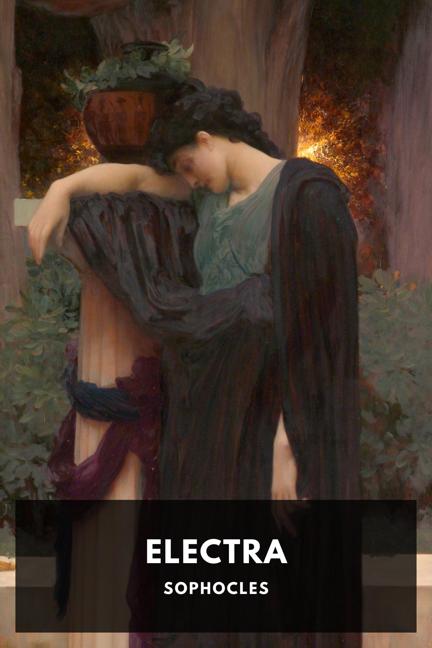
I’ve been slowly working my way through Greek tragedies, specifically Sophocles, because there’s an excellent collection available on Standard Ebooks — free, beautifully formatted, and easy to read on any device.
They’re short. They’re fast. And they’re fascinating simply because of how old they are. It’s a little mind-bending to sit with art from this long ago.
Electra follows the family of Agamemnon after the Battle of Troy — specifically his daughter Electra, who is consumed by grief and rage over her father’s murder and her desire for justice.
What I Liked
I can’t call it my favorite Greek tragedy, but it’s genuinely interesting — especially the dialogues and the character monologues.
At its core, Electra is a meditation on justice. What does justice actually look like? Does a wrong plus a wrong equal a right? How do you hold space for both justice and forgiveness? What’s fate, and what’s human agency?
The striking thing is that you could drop Electra’s monologues into a conversation happening right now in 2026 and they’d land. Humans are still working through all of this. Sophocles just got there first.
What Surprised Me
The ending. I don’t know if spoiler warnings apply to Greek tragedies, but Sophocles just… stops. At first I assumed it was a manuscript issue — that we simply didn’t have the full text. Turns out that was just Sophocles’ style. When he felt the story was done, he ended it. No tidy resolution. No epilogue. Done.
I also didn’t realize that Electra wasn’t a single story — all the major Greek poets wrote their own versions with their own take. I probably won’t hunt them all down, but it reframes what you’re reading when you know that going in.
One Thing I Did Differently
For this one, I asked Claude to be my literature professor before I started reading. I asked for a quick overview of the characters and what to watch for thematically.
It was genuinely useful — not as a substitute for reading, but as a way to accelerate the learning. I went in with context instead of spending the first third of the play getting my bearings. Highly recommend that approach for any classic where the setting and characters need a little setup.
Sophocles' Electra follows Agamemnon's daughter in the aftermath of the Battle of Troy. It's a short, fast read that holds up surprisingly well — the questions it raises about justice, forgiveness, and human agency feel as relevant in 2026 as they did in ancient Greece. The abrupt ending is jarring at first, but apparently that was just Sophocles' style. Free on Standard Ebooks.
- Raises timeless questions about justice and human agency that still resonate today
- Short, fast read available free on Standard Ebooks
- Using AI as a "literature professor" beforehand adds useful context without spoiling anything
- The ending is abrupt and unsatisfying if you're not expecting it
- Requires some background knowledge of Greek mythology to fully appreciate
- Not the most accessible entry point into Greek tragedy