The Natural Navigator by Tristan Gooley

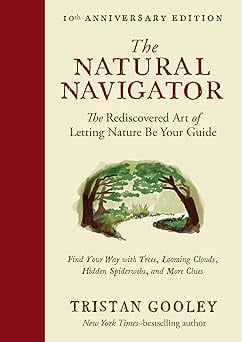
The Natural Navigator by Tristan Gooley is part of a trilogy — alongside How to Read Water and How to Read Nature — and the whole series is about learning to read the world around you rather than a screen in your hand.
Navigation in particular feels like a tradition that is slipping away faster than almost any other outdoor skill. Every year, GPS gets more accurate, more embedded, more invisible. It’s baked into our cars, our watches, our doorbells. Maps on our phones have become so frictionless that the very act of orienting yourself — of figuring out where north is, of reading the landscape — is becoming genuinely rare.
Gooley pushes back on all of that. He covers navigating by the sun, the moon, stars, plants, animals, weather patterns, and the shape of the land itself. Every chapter builds the case that the natural world is full of directional information that humans read fluently for thousands of years — and mostly stopped reading about fifteen minutes ago.
What I Liked
Gooley’s writing is lyrical and descriptive in a way that a lot of nature and science writing has moved away from. He’s clearly someone who has spent real time outside, and the book reads like it. It never feels like a Wikipedia article dressed up with paragraph breaks.
The practical examples are genuinely useful. This isn’t a purely philosophical “go touch grass” kind of book. He gives you specific, actionable techniques — how to use tree growth patterns, how to track the sun’s arc, how to read the stars — that you can actually try the next time you’re outside.
And honestly, the lyricism works in the book’s favor. A dry reference manual would be easier to skim and easier to forget. The storytelling makes the techniques stick.
What I Didn’t Like
Not much. If you’re looking for a quick-reference field guide, this isn’t it. It reads like a book, not a checklist. That’s a feature for most readers, but worth knowing going in.
What I Learned
The biggest takeaway isn’t any single technique — it’s the realization that orientation used to be a basic literacy. Not a survival skill or a niche hobby, just something people did. The idea that you could look at the moss on a rock, or the lean of a tree, or the position of the sun at midday and know something real about where you are feels radical now. It shouldn’t.
I’ve started paying more attention on hikes — noticing which side of the trail the trees are fuller on, watching where shadows fall. I’m nowhere near competent, but I’m paying attention in a way I wasn’t before. That’s probably the best thing a book can do.
The Natural Navigator by Tristan Gooley is a lyrical, practical guide to finding your way using the sun, moon, stars, plants, and landscape — skills that GPS has quietly made obsolete. Part of a trilogy, the book makes a compelling case that natural navigation was once basic human literacy. Gooley's storytelling keeps the techniques memorable rather than dry. Best for outdoor enthusiasts who want to be less dependent on their devices.
- Lyrical, engaging writing that makes techniques stick
- Practical examples you can actually try outside
- Makes a convincing, thought-provoking case for why this skill still matters
- Reads like a book, not a quick-reference field guide
- Requires patience — not a skim-and-apply resource