How To Read Water by Tristan Gooley

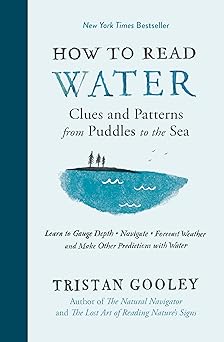
How to Read Water by Tristan Gooley is the third book in his natural navigation trilogy, alongside The Natural Navigator and How to Read Nature. It’s also the longest of the three — and that length is both a feature and a bug.
What the Book Is
Gooley is a lyrical writer with a gift for turning observation into a framework. That framework is really the heart of all his books, and it’s what makes them genuinely useful rather than just pleasant to read.
The core structure he gives you for any body of water goes something like this: Where are you? What should you expect to see here? What are you actually seeing? What does that tell you? And how does all of it help you better appreciate what’s in front of you?
It sounds simple, but having that mental checklist changes how you look at moving water, still water, tidal patterns — really anything wet. How to Read Water runs that framework across an enormous range of territory, from puddles and streams all the way out to the open ocean.
What I Liked
The science is solid and the communication is excellent. Gooley writes like a science communicator, not a scientist — which means the information is grounded and accurate without ever getting dry or inaccessible.
There’s also something I appreciate about writers who clearly love their subject. Gooley isn’t summarizing water for you. He’s sharing decades of paying close attention to it, and that shows on every page.
If you spend any time near rivers, coastlines, or really any water at all, this book will permanently change what you notice.
What I Didn’t Like
It’s long. It’s dense. And when your subject is “all water, everywhere,” that’s probably inevitable — but it could have used a tighter editorial hand. A few sections overstay their welcome, and the sheer scope of the book means some chapters feel like a slog before they pay off.
That said, it’s the same complaint you might make about a really thorough reference book. It’s a feature as much as a flaw depending on how deep you want to go.
Who Should Read It
Anyone who hikes, kayaks, sails, fishes, or just spends time near water will find this worthwhile. It’s also a solid pick if you’ve already read The Natural Navigator or How to Read Nature and want to go deeper into a single subject.
Gooley’s trilogy as a whole is one of the better investments I’ve made in books that actually change how I experience being outside. How to Read Water is the heaviest lift of the three, but it earns it.
How to Read Water by Tristan Gooley is the longest book in his natural navigation trilogy — and it shows. Gooley gives you a practical framework for observing any body of water, from puddles to the open ocean, written with the clarity of a great science communicator. It runs long and dense, but if you spend time near water, it will permanently change what you notice.
- Practical observational framework you'll actually use outdoors
- Excellent science communication — accurate without being dry
- Covers an impressive range of water environments in one book
- Longest of the trilogy and could have been tightened editorially
- Scope is so broad that some chapters feel like a slog before paying off
- Less accessible as a starting point than his other two books