How To Read Nature by Tristan Gooley

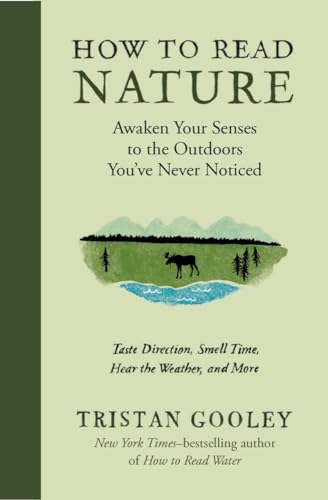
How to Read Nature is the third book in Tristan Gooley’s nature-reading trilogy, alongside The Natural Navigator and How to Read Water. Of the three, I think it’s the strongest.
I came to this book as someone who spends a decent amount of time outside — hiking, backpacking, running trails — but without any formal naturalist training. I can identify a handful of tree species and read a topo map, but I wouldn’t call myself someone who truly reads the landscape. That’s exactly the gap this book fills.
What I Liked
The thing that sets How to Read Nature apart from a typical field guide or tips-and-tricks book is that Gooley doesn’t just hand you a list of observations. He builds a framework. Wherever you are — a city park, a mountain trail, a stretch of coastline — you can work through his approach to understand what you’re looking at, what it means, and what to expect next.
That distinction matters more than it sounds. A list of tips is something you forget. A framework is something you internalize. After reading this book, I found myself noticing things on walks that I had been walking past for years.
More than the practical value, Gooley makes the case that reading nature this way builds genuine appreciation for wherever you happen to be standing. It’s not just navigation or survival knowledge — it’s a vocabulary for paying attention. Whether you have a science background or not, his books sharpen your observation of the natural world in a way that sticks.
Of the three books in the trilogy, How to Read Nature is the most dense with information, and I mean that as a compliment. It delivers the brass tacks without sacrificing the depth.
What I Didn’t Like
Gooley’s prose is genuinely lyrical, which is part of what makes his books unique and worth reading. But occasionally — and this is a minor gripe — he gets a bit roundabout when I just want him to get to the point. A little more directness in a few sections would have served the material well.
That’s about it. It’s a thin complaint about an otherwise excellent book.
Who Should Read It
If you spend any time outside and want to do more than just move through a landscape — if you want to actually read it — this is the book. It’s especially useful if you’ve already read The Natural Navigator or How to Read Water, but it stands on its own just fine. Highly recommended.
How to Read Nature is the strongest of Tristan Gooley's nature-reading trilogy. Rather than a simple list of tips, Gooley builds a reusable framework for reading any landscape — and that's what makes it stick. It's dense with practical information while still building genuine appreciation for the natural world. Minor complaint: he occasionally gets too lyrical when directness would serve better. Highly recommended for anyone who spends time outside.
- Teaches a reusable framework, not just a list of tips you'll forget
- Dense with practical information — the most substantive of the trilogy
- Builds real appreciation for the natural world alongside the practical skills
- Occasionally too lyrical when directness would serve the material better

Quotes
SO FAR, WE HAVE TAKEN THE following steps to read with nature:
- Applied new skills to the natural world, and tried doing new things.
- Flexed our senses and given them a workout.
- Grown comfortable with landscapes, habitats, and the broadest of nature’s brushstrokes.
- Investigated a few of the finer connections to be found.
- Allowed ourselves to be allured by conflict.
- Appreciated the role of time in nature, and that we will never get a chance to witness anything in exactly the same way twice.
- Stepped into the landscape and made ourselves part of the nature experience.
But the real change will come often not because of the more interesting things that you see, but because you will have learned how to find more interest in the things you do see.