Why I Look For Wilderness Designation In Public Lands


America’s public lands are an absolute treasure. But among all of them, the ones I keep coming back to are the areas designated as Wilderness.
There are plenty of good reasons to care about the Wilderness Act — scientific, economic, historical, political. Those all get discussed. The one that gets under-discussed, because it’s genuinely hard to talk about without sounding like a greeting card, is that wilderness is for transcendence.
There aren’t many places left where you can walk in and immediately feel not just awe, but humility. Where you get the sense that you’re part of something older and bigger than you, and that you personally are not that big a deal – in a good way. Designated wilderness does that on purpose. It’s the whole point of the thing.
What Designated Wilderness Actually Is
Wilderness is confusing partly because the word does double duty. Little-w wilderness is a descriptor. Capital-W Wilderness is a legal designation, and it’s an overlay. It sits on top of land that’s already public.
So you can have designated Wilderness inside a National Park, a National Forest, a National Wildlife Refuge, or on Bureau of Land Management land. The underlying agency still manages it. They just manage it under a completely different set of instructions.
Only Congress can create it. Once it exists: no roads, no permanent structures, no logging, no mechanized or motorized equipment. No chainsaws, no bikes, no vehicles. Trail crews cut blowdowns with crosscut saws.
This is where the distinction between conservation and preservation gets real. As I wrote in my review of America’s Great National Forests, the Forest Service’s mission is conservation – the wise use of land for the greatest benefit of the greatest number of people. Wilderness designation is the one place where we’ve told that same agency, on that same ground, to stop using it.
Same trees. Same staff. Opposite instruction.
“Untrammeled” Is Not “Untrampled”
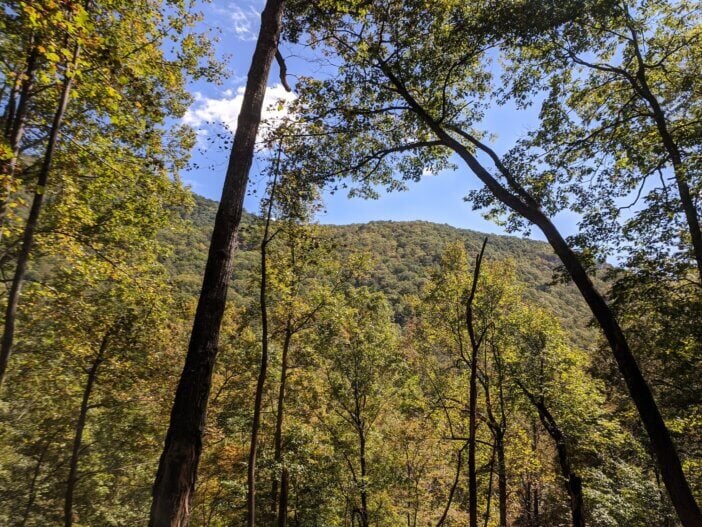
The 1964 Wilderness Act describes wilderness as land “untrammeled by man.” Almost everybody reads that as untrampled, meaning pristine, meaning nobody’s ever walked there.*
*which, though most Wilderness opposition comes from misunderstandings on the conservative end of the spectrum (e.g., we should use public land); this wording is what gets misunderstandings on the liberal end of the spectrum (e.g., humans were / are here and “pristine” is a racist lens on history). Both misunderstandings are fair. Wilderness is a construct & a resource. And many good ideas originated from not good people.
That’s not what it says. To trammel something is to restrain it, to put it in a net, to control it. So “untrammel” is to not restrain it, to not put it in a net, to not control it, Howard Zahniser chose that word deliberately over several decades of drafting. Untrammeled means unmanipulated. It means a place that gets to run itself.
That’s a much lower bar than “pristine,” (again, if that even is a real concept at all) and a much higher one. It doesn’t ask whether the land has been used (it has, and it has changed, and will change again). It asks whether we’re are going to keep steering it.
Which brings me to my home wilderness.
The Cohutta Was a Logging Operation
The Cohutta is the largest Forest Service wilderness east of the Mississippi*, and it’s the one I know best. It’s also a place that was absolutely hammered by humans.
*and props to my State of Georgia, the largest is in the Okefenokee National Wildlife Refuge.
The Conasauga River Trail and the Jacks River Trail – the two best trails in the whole area – are old railroad grades. The Conasauga River Lumber Company ran logging railroads up those river bottoms and cut the place over.
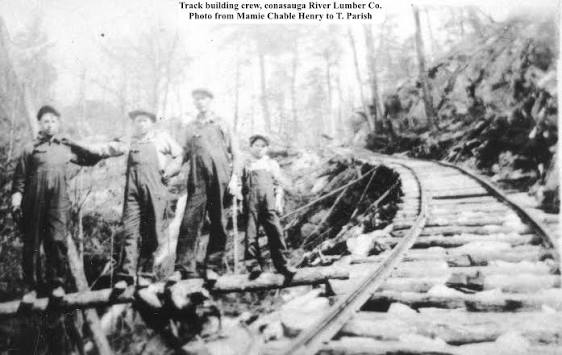
You don’t have to take my word for it or read a Forest Service history to know this. You can find old cable and cut steel lying in the leaf litter. The grades themselves are obvious once you know what you’re looking at, because rivers don’t build benches that flat.
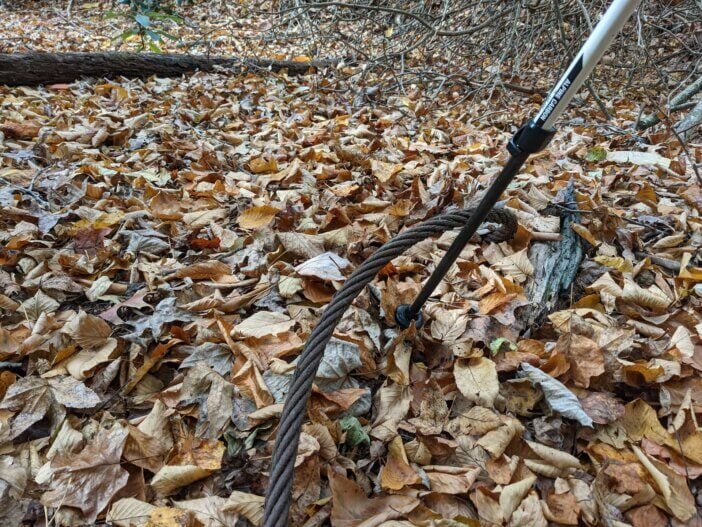
And that land is now forest again. Not old growth, not untouched, but recovering hardwood forest with a river running through the middle of it that you’ll ford twenty-plus times in a day.
Congress designated it in 1975, under the Eastern Wilderness Areas Act, precisely because the eastern forests that had been logged out and left for dead were coming back. Okefenokee is the same story from a different direction – bigger than the Cohutta, a Wildlife Refuge rather than a National Forest, and also cut into, drained, and worked over by people before it was set aside.
So the land isn’t special. Not in the sense of being untouched. Almost none of it is.
The restraint is what’s special. That’s the actual flex. Anybody can protect a place nobody ever wanted. Deciding to stop messing with a place we already ruined once, and then holding that line by law for fifty years, is a much stranger and better thing for a country to do.
Crossing the Boundary
In a regular National Forest, you might have a graded Forest Service road, a trailhead kiosk, benches, an overlook, a campground with a pit toilet. The stands may have been thinned or burned or replanted. All of that is fine. That’s the job. Those are working lands and I use them constantly.
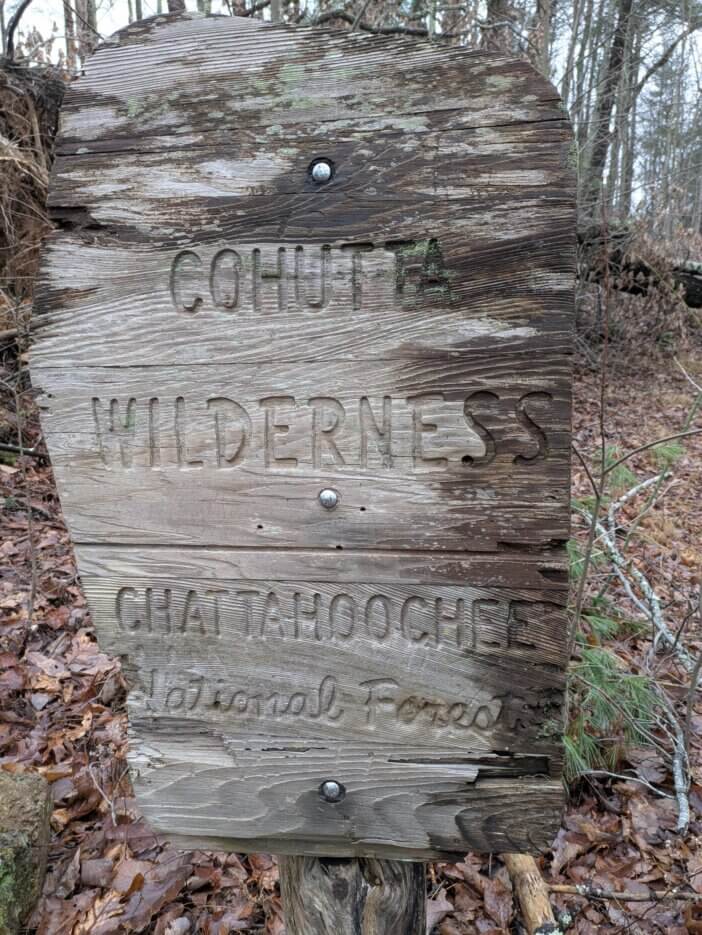
Then you hit the wilderness boundary sign and all of it stops.
There’s no objective on the other side. Nothing is being improved. Nothing is being optimized for your visit. There’s no better and no worse – there’s just enough, as it is. That phrase is stolen from Bogle, but it applies here more literally than it does to money.
You can’t put a price on that, and you can’t really put a reason on it either. Not until it’s gone. That’s the catch with this whole category of value: you can only measure it by its absence.
Which is exactly what the foresters and writers of the 1920s and ’30s figured out. Aldo Leopold and Arthur Carhart looked at what industrial civilization had just demonstrated it could do – to Europe, to the American landscape – and worked out that it was now possible to engineer wild country out of existence entirely, if we felt like it. Not by accident. On purpose, with equipment. The response was to start drawing lines around places and agreeing, in advance, not to.
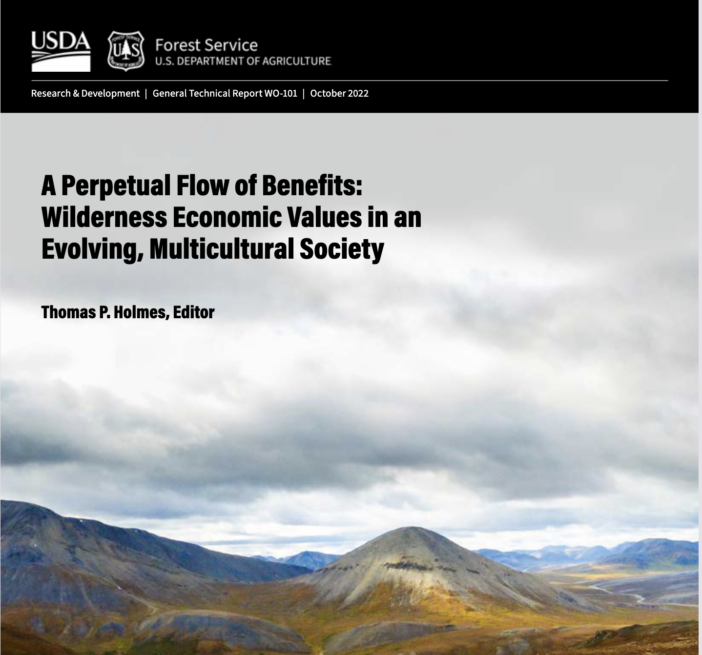
It took until 1964 to get that into law. The Wilderness Act designated 9.1 million acres immediately and set up a long-term study process for everything added since.
Designation Is Not Preservation
The most useful thing I’ve read on any of this is The Enduring Wilderness by Doug Scott, and his central point is one that a lot of wilderness fans skip past: designating an area does not assure its actual, on-the-ground preservation.
The boundary is a line on a map. It still has to be defended every single year. Grazing rights, private inholdings, mining claims, access disputes, fire management, insects and disease, cultural sites – all of that continues after the vote, and every one of those decisions can quietly re-trammel a place while the designation stays technically intact. This is the same inholding problem I ran into hiking the Oconee National Forest, just with higher stakes.
There are real tradeoffs too, and I’d rather name them than pretend they don’t exist. Wilderness trails are harder, rougher, worse-marked, and less maintained, and the ban on mechanized equipment is part* of why.
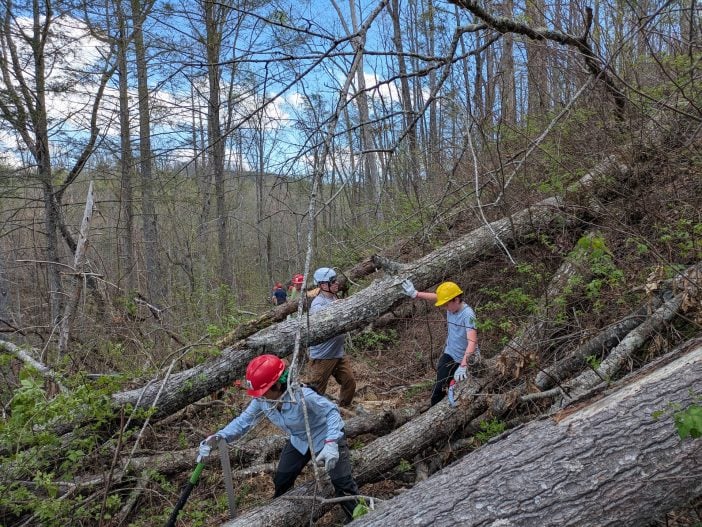
*the full reason is underfunding the US Forest Service & public lands in general. The chainsaw is almost always a distraction, since a well-trained saw team can actually work more efficiently in deep backcountry with traditional tools than with chainsaw, required PPE, and supplies.
Accessibility is a genuine problem, and “you have to be able-bodied enough to walk five miles over a ford” is not a great answer to it. Reasonable people fight about whether the crosscut-saw rule serves the land or just serves the aesthetic.
I still think the rules are worth it, mainly due to the slippery slope problem in decision-making. Also, as my Mom would say – “if you’re gonna do something, go ahead and do it right”. And the argument for Wilderness (or, looking globally, IUCN 1a Designation) is stronger, not weaker, when you admit what it costs.
Next Steps
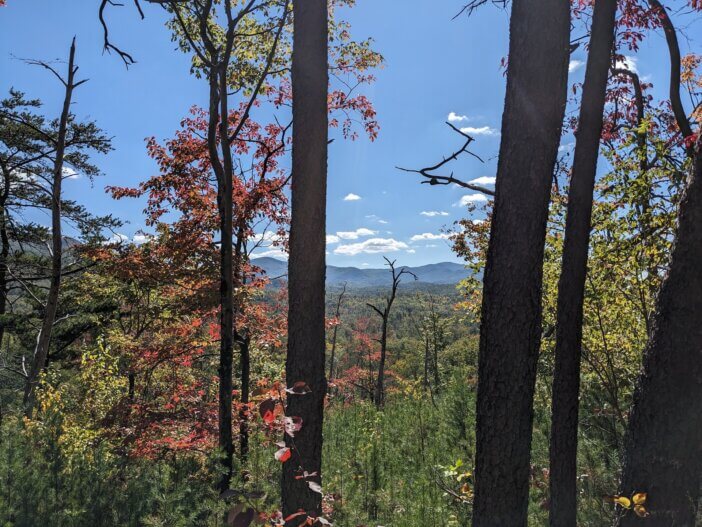
Next time you’re looking for a hike, look for the Wilderness designation on the map. It’ll be wilder, rougher, and harder to get to than your county park or your state park or even most of the national forest around it. That is the feature.
And if you can’t get out there — most people can’t, most of the time — you still get something out of it. It’s enough to know you could walk to the edge of a place that isn’t being managed for you.
That’s why I love wilderness.
- Find one near you via wilderness.net.
- Support the groups doing the unglamorous work. Cohutta Wilderness Trail Volunteers covers the Cohutta and while the Georgia ForestWatch, Georgia ATC Club & Benton MacKaye Clubs cover most the rest of the Chattahoochee-Oconee’s Wilderness. There is probably a collaborative Friends’ group near you supporting the USFS.
- Make sure you contact your Federal representatives to make sure they know that our land should be protected & taken care of by the professionals at the land agencies…not by private industry.
- The Wilderness Land Trust buys up inholdings & edgeholdings and hands them over – one of the most effective nonprofits in the country, in my opinion.
- Read The Enduring Wilderness if you want to understand how a bill like this actually gets passed. It’s decades of people checking in on individual Congressmen, over and over, for their entire adult lives.
- Read Wilderness Warrior, Our Rightful Heritage, and Silent Spring Revolution – all by Douglas Brinkley about the US environmental movement in the 20th Century.
Get Posts Automagically
…also via RSS or Fediverse – just copy link & paste in your favorite reader :)