Cimarron by Edna Ferber

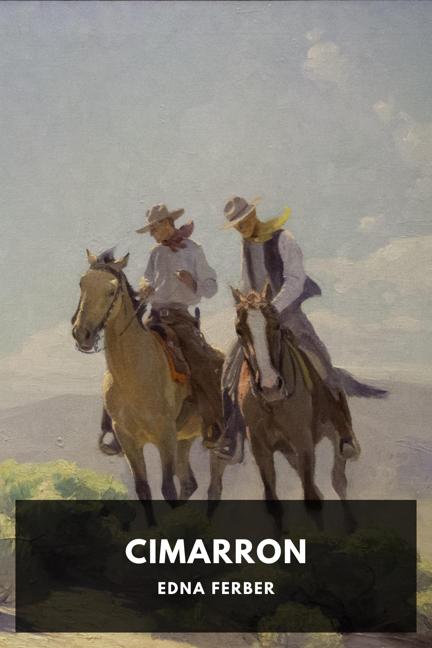
I picked up Cimarron by Edna Ferber from Standard Ebooks, mostly because it’s free and I wanted something to speed read.
It’s a western published in 1929, and it covers the settlement of Oklahoma – which was one of the very last pieces of the old frontier to be opened up. The book starts with the Land Run of 1889, when the federal government opened Indian Territory to white settlement after having pushed the Cherokee, Chickasaw, Choctaw, Creek, and Seminole onto that land in the first place during the Trail of Tears. So the “last frontier” was actually land that had already been promised to somebody else, taken away, and re-opened. Ferber does not let you forget that.
The characters are all over the top. But they’re over the top in a way that feels exactly right for the tail end of the American frontier – everybody is performing a role they read about somewhere.
And that’s really what the book is about.
The Myth Was Never True, and Even When It Was, It Was a Performance
The central myth of the American West is that a single pioneer could ride out, plant a flag, and carve out a destiny through sheer force of will.
Ferber’s argument is that this was never really true. And more interesting – even in the cases where it was sort of true, most of it was performance. There was a guy out front doing the legendary stuff, and then there were a lot of other people doing the actual work.
Yancey Cravat is the legend. He’s the one with the reputation, the one people tell stories about, the one who shows up and makes a scene and rides off. He is genuinely brave and genuinely good at the things legends are supposed to be good at.
But it becomes very apparent, chapter by chapter, that the actual settling of the West came down to his wife Sabra, to his friends, and to companies that could plan ahead (and deploy serious capital) instead of reacting to whatever was directly in front of them. Sabra runs the newspaper. Sabra raises the kids. Sabra builds the town. Sabra ends up in Congress. Yancey wanders off for years at a time and comes back to be a legend again.
That gap between the legend and the ledger is the whole book. It’s a really good gap.
What I Liked
The setting. Oklahoma in the boom years is a genuinely wild place to set a novel – land runs, oil strikes, instant towns, and everybody arriving at once from somewhere else. It never gets boring as a backdrop.
Reading characters written in the 1920s. This is the thing I keep coming back to. We look back at a long time ago and judge “the general attitudes” of the era as if everybody thought the same way. But even way back, there were plenty of people who were completely aware of what was going on.
It’s the same as slavery – there were abolitionists making the exact right argument hundreds of years before it won. In the old West, there were people who opposed Indian removal and who saw clearly what the settlement of the West actually was.
Ferber knew that, and she wrote it into a popular novel in 1929. Yancey’s whole editorial career is built on defending the tribes against people trying to take the land a second time. That is not a modern reader projecting backwards. That’s what’s on the page.
What I Did Not Like
The writer definitely could have used an editor – though I suspect she may have been paid by the word.
The beginning is great. The land run, the arrival, building the town, all of it moves. The ending is great. But the middle sags badly — there’s a long stretch of Osage social life, town gossip, and Sabra’s civic committee work where nothing happens and the same points get made three or four times.
I ended up just skimming it.
What I Learned
The lesson I keep taking away from period fiction is that “everybody thought that way back then” almost always requires more nuance. There’s (almost) always a contemporary critic. Usually there are a lot of them. We just don’t remember them because they lost.
The other one: the people who build things are rarely the people who get remembered for building things. The planners beat the reactors every single time, and the reactors get the statue.
Wrap-Up
Overall, it’s a good novel for a period novel. It’s free, it’s public domain, and it’s good speed reading.
I had wondered whether someone would take the basic premise and characters and turn it into a film – and it turns out that already happened. Twice. The 1931 adaptation won the Academy Award for Best Picture, and there was a remake in 1960 with Glenn Ford.
Which is sort of perfect, honestly. A book about how the legend gets remembered and the actual work gets forgotten won Hollywood’s biggest prize, and now almost nobody has heard of the book, the movie, or Edna Ferber.
You can grab it free from Standard Ebooks.
Cimarron is Edna Ferber's 1929 western about the settlement of Oklahoma, starting with the 1889 Land Run on land taken from the Cherokee, Chickasaw, and other tribes. The book follows Yancey Cravat, a frontier legend, and his wife Sabra, who does the actual work of building a town. It's a sharp look at how the myth of the lone pioneer was mostly performance.
- Great setting - land runs, oil booms, and instant towns make a wild backdrop
- Ferber's critique of Indian removal proves contemporary critics existed, written in 1929
- Free, public domain, and good speed reading
- The middle sags badly with repetitive town gossip and committee scenes
- Characters are over the top, which won't work for every reader
- Could have used a serious editor
Get Posts Automagically
…also via RSS or Fediverse – just copy link & paste in your favorite reader :)