6+ Favorite Books on Global Economics (So Far!)


Here is a roundup of my favorite books on global economics (so far!). I hope you find something interesting & a little different.
-
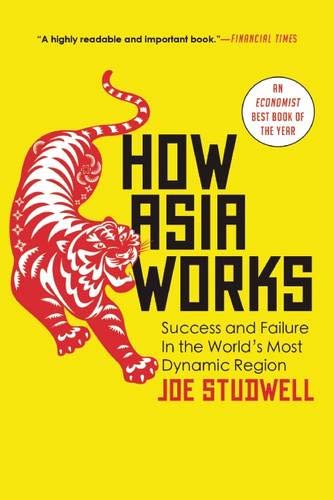
 $11.89In How Asia Works, Joe Studwell takes a close look at the economic development of several Asian countries, including Japan, Korea, and China. He argues that land reform, smart manufacturing policies, and effective finance have been key to their success. I found his insights about household farming and the importance of a structured approach to economic growth really engaging. Having grown up in Southeast Asia, I appreciated how this book connects historical context with actionable lessons. Honestly, I couldn't find anything to criticize—it's straightforward and easy to digest, making it a great read for anyone interested in global economics.Buy Now Read My ReviewPros:
- In-depth analysis of economic development in Asia
- Focuses on key economies like Japan, Korea, and China
- Offers useful takeaways for developing countries
Cons:- Nothing - it's very accessible, even for a niche global affairs book.
I earn a commission at no cost to you when bought via this link. Also check your local library. Thank you!
09/13/2026 08:10 am GMT -
$15.20In Global Capitalism, Jeffrey Frieden takes us through the ups and downs of the global economy in the twentieth century. He breaks down how capitalism evolved, highlighting key events and themes like winners and losers, risk, and technological change. I found it brilliant for putting the last 80 years of economic shifts into perspective, but I did struggle with some of the academic jargon—having a solid background in the topic would definitely help. Overall, it's a valuable read for anyone wanting to understand the broader economic landscape, just be ready for a bit of a challenge!Buy Now Read My ReviewPros:
- Comprehensive history of the global economy in the twentieth century
- Brilliant in contextualizing massive economic changes
- Detailed account of key economic and political events
Cons:- Gets a bit academic at points
- Requires a good bit of background to understand arguments
I earn a commission at no cost to you when bought via this link. Also check your local library. Thank you!
09/16/2026 09:01 pm GMT -
$11.12In The Post-American World, Fareed Zakaria tackles how the rise of free markets and globalization has shifted power away from the US to other nations. He discusses how the end of communism and the growth of global markets have created a more level playing field. Zakaria points out America's struggles in education and infrastructure, urging a rethink of its global role. I really enjoyed this book; Zakaria has smart insights that shine through, even if he’s more known for soundbites now. Honestly, there's not much to dislike—it's still relevant today.Buy Now Read My ReviewPros:
- Zakaria presents smart ideas about global power dynamics.
- The book is highly relevant even in 2023.
- It offers a comprehensive analysis of America's changing role in the world.
Cons:- Not a whole lot.
I earn a commission at no cost to you when bought via this link. Also check your local library. Thank you!
09/06/2026 11:09 am GMT -
$12.69In Commanding Heights, Daniel Yergin explores the intense clash between socialism and market-driven economies throughout the twentieth century. I found the book to be rich in detail, offering a deeper understanding than the film adaptation I saw in college. The authors balance complex viewpoints on power and control, but I felt they leaned too much into the communist narrative, overlooking the messy realities of Western privatization. It's a thought-provoking read that sheds light on economic struggles that impact us all, even if it sometimes feels overly ideological. Overall, it’s a worthwhile dive into a fascinating topic.Buy Now Read My ReviewPros:
- The book provides much more detail and nuance than the film adaptation.
- The authors present a nuanced view of power dynamics in economic control.
- It pairs well with another insightful book on capitalism and privatization.
Cons:- The authors focus too much on communism and not enough on the costs of the West's privatization.
I earn a commission at no cost to you when bought via this link. Also check your local library. Thank you!
09/01/2026 08:08 pm GMT -
$65.86
In The World That Trade Created, Kenneth Pomeranz explores the history of trade and its impact on our world. The book is filled with engaging vignettes that break down complex themes like economic globalization, the cultural effects of trade, and its role in shaping the global economy. I appreciated how the chapters are organized, making the content easy to digest without feeling overly academic. Honestly, I didn’t find anything to criticize—it's just a solid read that offers valuable insights into how trade has influenced society over the past 700 years.
Buy Now Read My ReviewPros:- Engaging and readable vignettes
- Covers a wide range of trade-related incidents
- Explores both positive and negative consequences of trade
- Approachable structure, less academic
- Provides valuable insights into historical roots of economic globalization
Cons:- Nothing - solid read.
I earn a commission at no cost to you when bought via this link. Also check your local library. Thank you!
09/16/2026 01:43 am GMT -
$11.77In A Splendid Exchange, William Burnstein takes us through the history of world trade, stretching from 3000 BC to today. He highlights how trade has shaped cultures, economies, and societies, covering everything from trade routes to the rise and fall of empires. I really appreciated how accessible and balanced the writing is—it's a refreshing change from the usual war-centered history books. Burnstein makes a strong case for trade as a force for good, though I didn’t find much to criticize. Overall, it’s a fascinating read that offers valuable insights into the past and future of trade.Buy Now Read My ReviewPros:
- Comprehensive coverage of world trade history
- Fresh insights into social, political, cultural, and economic impacts
- Accessible and well-argued writing style
Cons:- Not a whole lot - very interesting book.
I earn a commission at no cost to you when bought via this link. Also check your local library. Thank you!
09/10/2026 03:12 am GMT -
$16.93In World 3.0, Pankaj Ghemawat takes a fresh look at globalization, arguing that the world isn't as flat as many think—differences and distances still play a big role. The book emphasizes that integration and regulation need to work hand in hand to foster successful globalization. I found it to be an engaging read, offering practical insights on how to achieve collective prosperity through new approaches to cross-border integration. Honestly, I didn’t find anything to dislike; it’s a solid book that’s much more enlightening than sifting through the usual news.Buy Now Read My ReviewPros:
- The book challenges the notion of a fully globalized world.
- It provides a fresh perspective on cross-border integration.
- Offers practical recommendations for stakeholders during global challenges.
Cons:- Nothing - good book.
I earn a commission at no cost to you when bought via this link. Also check your local library. Thank you!
09/16/2026 04:37 am GMT -
$26.49In The World For Sale, Javier Blas takes a close look at the influence of a few powerful commodity trading houses on the global market. The authors, seasoned experts in natural resources, highlight how these traders link resource-rich nations to financial hubs, often amidst corruption and conflict. I was blown away by the book’s insights into how these traders shape economies and even government policies while engaging in some shady practices. It’s a real eye-opener about where our resources come from and the environmental impact involved. Honestly, I couldn’t find a thing I didn’t like about it—it's an engaging read filled with fascinating stories.Buy Now Read My ReviewPros:
- The book provides detailed insight into the commodity trading industry.
- The authors have extensive experience covering natural resources.
- It highlights the political influence of commodity traders and their impact on global trade.
Cons:- Nothing - it's fabulously written with jaw-dropping anecdotes.
I earn a commission at no cost to you when bought via this link. Also check your local library. Thank you!
09/12/2026 09:35 pm GMT