Dynamics of Faith by Paul Tillich

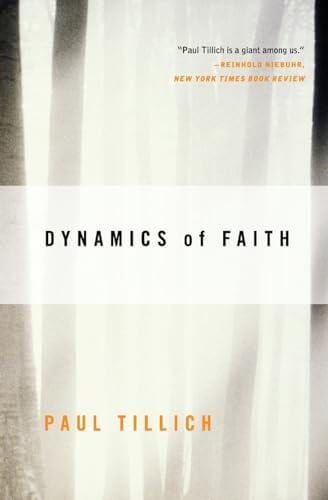
I picked up Dynamics of Faith at a used bookstore along with The Courage to Be — same author, same shelf, same trip. I treat them as a pair. If you want my full take on Tillich’s broader project, the Courage to Be review covers that ground. This one focuses on Dynamics of Faith specifically.
Which is a slim, dense, surprisingly readable book with one very ambitious goal: to actually define faith in a unique useful way.
What the Book Argues
Tillich’s problem with the word “faith” is that it’s almost always used as a synonym for either belief or hope — and he thinks both are wrong, or at least imprecise. Belief is intellectual. Hope is forward-looking. Neither quite captures what faith actually is or does for a person.
His replacement concept is what he calls ultimate concern — the meta-value that sits above all your other values and determines how you organize your life. It’s the thing you’re most fundamentally oriented toward, whether you frame it in religious terms or not. For a believer, that might be God, or transcendence, or what Tillich calls “the ground of being.” For a secular person, it might be human flourishing, meaning-making, or community.
The point is that everyone has one. Faith, in Tillich’s definition, isn’t about whether you go to church. It’s about what you’re ultimately for.
What I Liked
The book is short and Tillich earns every page. For a philosopher-theologian writing in the 1950s, he keeps the jargon remarkably manageable. When he does introduce technical terms, he’s careful to define them clearly and he sticks to his definitions. You don’t spend the whole book re-reading sentences.
It’s also worth understanding the context Tillich was writing in. He’s part of a fascinating mid-century cohort of thinkers — Elie Wiesel, Abraham Maslow, Erich Fromm, Simone de Beauvoir, Albert Camus — who were wrestling with the same enormous question: what do you do with being human after World War II and the Holocaust? Add in nuclear weapons, automation, jet travel, and mass telecommunications, and you’ve got a generation of philosophers, theologians, psychologists, and sociologists all trying to figure out what it means to live a meaningful life in a world that had just demonstrated its capacity for industrialized evil.
Dynamics of Faith is squarely in that tradition. Reading it in that context makes it feel less like a theology text and more like a practical philosophy for staying sane.
What I Didn’t Like
Not a lot, honestly. The book is exactly what it sets out to be.
The one real caveat is that it works better as part of a cluster read than on its own. You’ll get more out of it if you’ve read The Courage to Be first, or if you’re doing a broader dive into existentialism or mid-century Christian thought. Coming to it cold, without any of that scaffolding, might leave you wishing for a bit more context.
Who It’s For
If you’re the kind of person who would have taken an extra philosophy elective in college, or who currently subscribes to a podcast like Philosophize This or Philosophy Bites — this book is for you. It’s not going to be anyone’s conversation starter at a dinner party, and you won’t find a lot of company talking about it. But for a deep dive into existentialism, 20th century theology, or the intellectual aftermath of World War II, it fits beautifully.
Highly recommended as part of that kind of cluster read.
- Short, precise, and remarkably readable for a 1950s theology text
- The "ultimate concern" framework is genuinely useful whether you're religious or not
- Pairs perfectly with a broader cluster read on existentialism or mid-century thought
- Works better as part of a cluster read than as a standalone
- Niche enough that you'll have very few people to talk about it with