Discourses by Epictetus

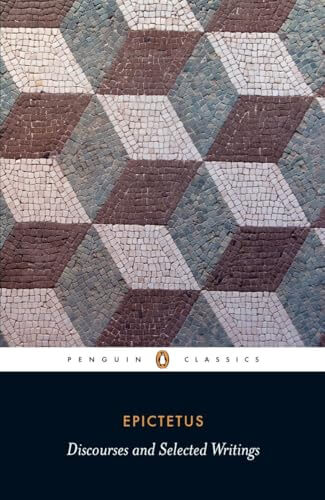
I picked up The Discourses by Epictetus from Standard Ebooks, then ended up buying the print Penguin edition as well. Stoic philosophy has had waves of popularity over the years, and I love that the most recent wave has brought a blossoming of new translations, resources, and accessible texts.
What makes this particularly valuable is that the original texts of Stoic philosophy are still around and still handed down. The three big ones—Seneca, Marcus Aurelius, and Epictetus—are all different and complementary. Seneca writes in the form of letters. Marcus Aurelius writes in the form of personal journaling. Epictetus, of the three, writes more systematically. You’re essentially reading his lectures.
I appreciate the wisdom in Stoic philosophy. There’s a lot there. And it’s embedded in so much of our modern thought. From Pauline Christianity to Cognitive Behavioral Therapy – it’s sort of “in the air” even if we’ve never noticed it. And even though Epictetus definitely seems rough around the edges as far as personality goes (in addition to all the given issues with ancient Greek thinkers)—he can be blunt and demanding in a way that might rub modern readers wrong—he writes clearly with a lot of practiced, practical wisdom.
What I Liked
The Discourses is highly readable and provides a much more systematic introduction to the philosophy of Stoicism. With Seneca and Marcus Aurelius, you kind of have to go hunting for the nuggets here and there. Their writings are personal, contextual, and scattered across different letters or journal entries.
But with Epictetus, you get structured teaching. He’s explaining core concepts methodically, building from one idea to the next. For someone trying to understand what Stoicism actually teaches—not just collect inspiring quotes—this is invaluable.
The lecture format also means you get Epictetus’s voice more directly. You hear his arguments, his examples, his frustrations with students who don’t get it. It feels alive in a way that journal entries sometimes don’t.
What I Did Not Like
Epictetus can be harsh. His personality comes through clearly, and he doesn’t suffer fools. If you’re looking for gentle wisdom, this might not be your first choice. He’s the stern teacher, not the encouraging mentor.
Some of the cultural context is also harder to parse than in Marcus Aurelius or Seneca. His writing is much older and much more rooted in ancient Greek context (e.g., with all the misogyny, racism, and chauvinism included). The lecture format assumes you’re already somewhat familiar with Stoic concepts, so complete beginners might occasionally feel lost.
Takeaways
If you want to understand Stoicism as a philosophy—not just as self-help aphorisms—The Discourses is essential reading. It’s the most systematic of the major Stoic texts, which makes it both more challenging and more rewarding than the other classics.
For readers coming from modern Stoic popularizers like Ryan Holiday or Tim Ferriss, this is where you go next. It’s the source material that grounds all those digestible lessons in actual philosophical framework.
Highly recommended if you’re ready to engage with Stoicism seriously, not just casually.
What makes this particularly valuable is that the original texts of Stoic philosophy are still around and still handed down. The three big ones—Seneca, Marcus Aurelius, and Epictetus—are all different and complementary. Seneca writes in the form of letters. Marcus Aurelius writes in the form of personal journaling. Epictetus, of the three, writes more systematically. You're essentially reading his lectures.
- Most systematic and structured of the major Stoic texts
- Highly readable lecture format with clear philosophical progression
- Essential source material that grounds modern Stoic teachings
- Epictetus's personality can be harsh and unforgiving
- Assumes some familiarity with Stoic concepts
- Cultural context can be harder to parse than other classics