5 Notes on Visiting an Industrial Electric Motor Factory

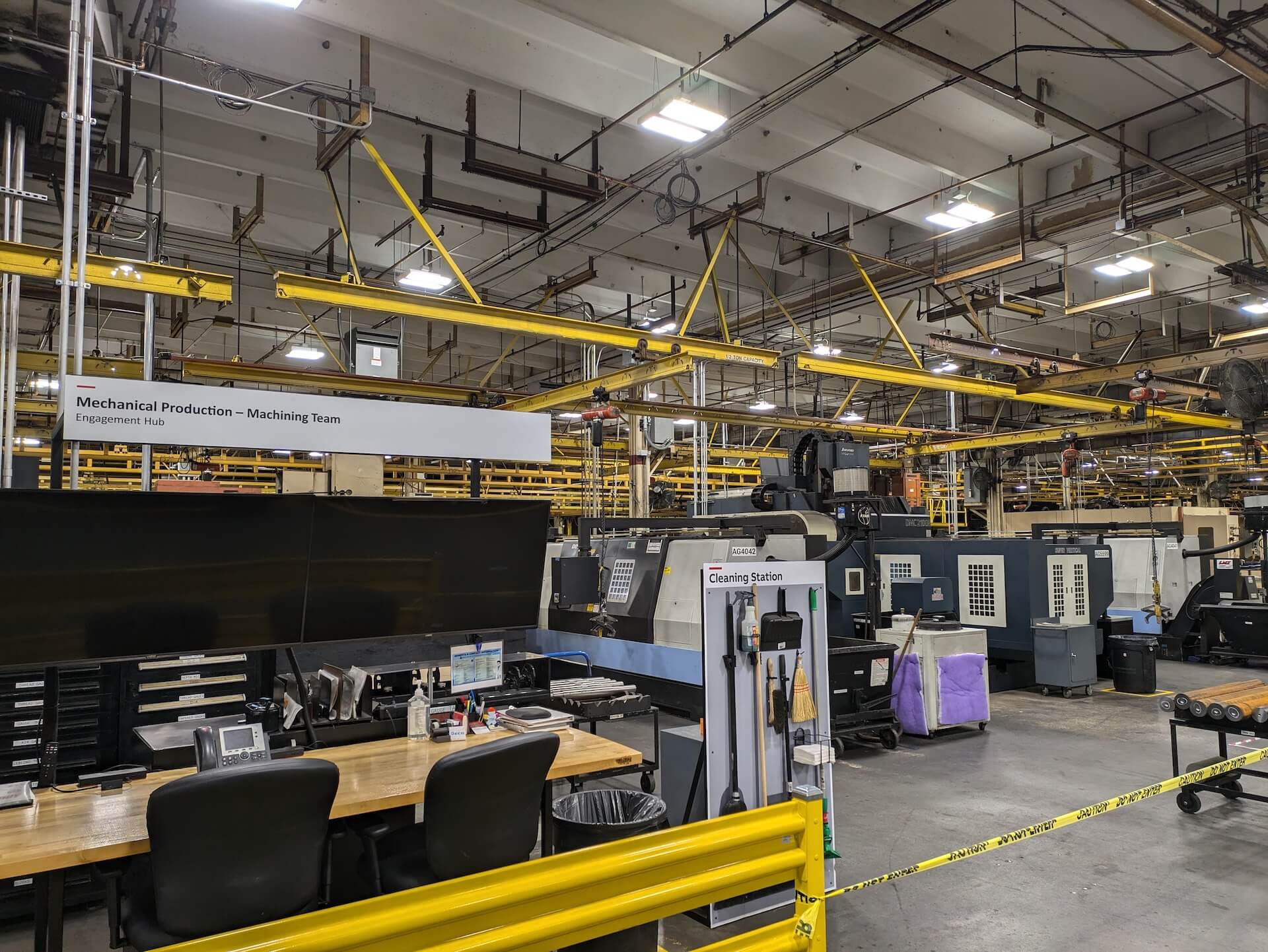
Every year, the ABB Baldor-Reliance plant in Athens, Georgia opens its doors to employees and their families. My father-in-law works there, so this past year I went. He and his floor supervisor walked us down the assembly line, station by station, explaining what happens at each one.
I come from a career of code and stories. So it was genuinely strange to stand in front of a giant plate of steel and rolls of raw copper – stuff dug out of the ground on the other side of the world – and watch it become a motor that turns things and cooks things and moves things.
Physical products are amazing in a way that I think digital products used to be.
A Place That Makes a Thing
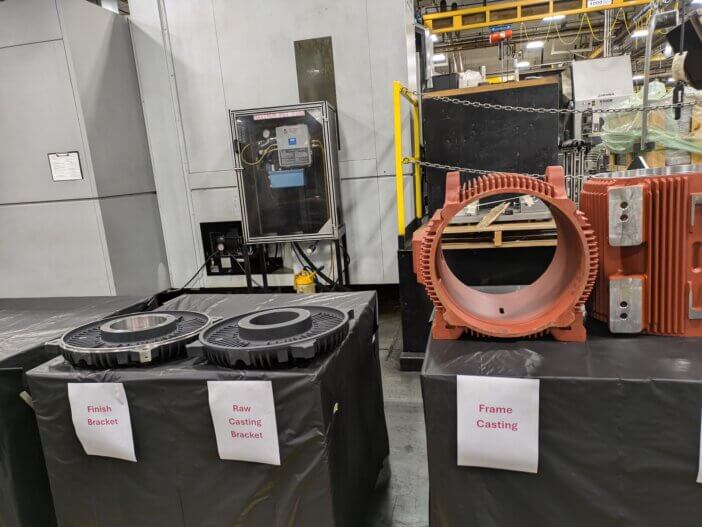
The motors range from about the size of a riding lawnmower up to the size of a small chair. At the core, they’re copper wiring wound around an axis, sealed inside a steel casing. That’s it. That’s the product.
But following one down the line is something else. Raw material comes in one end and a working industrial motor comes out the other, and every station in between is a specific problem that somebody figured out how to solve.
According to the Athens Chamber of Commerce, the plant has been making industrial electric motors here for 50 years, serving OEMs, distributors, and industrial customers. Fifty years of the same basic thing, done better and better.
Capital, Labor & Global Markets
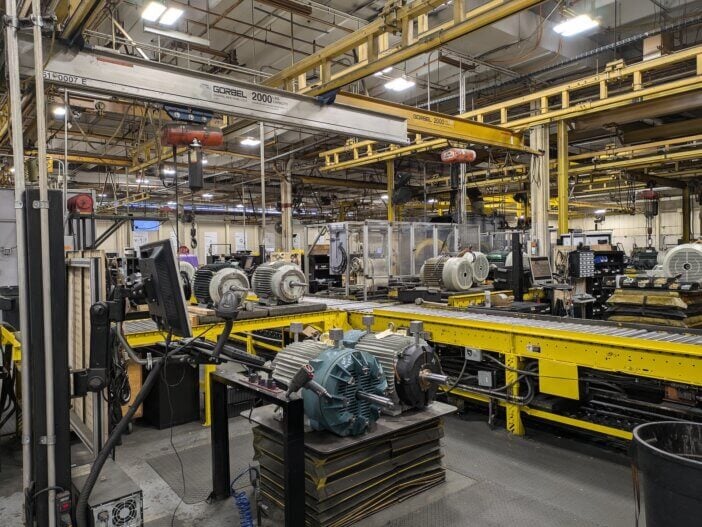
Here’s what struck me most. The steel comes from India. The machines that do the work come from Taiwan*. Small components come from Japan*. The paint comes from Mexico*. The copper comes from Chile*.
*the irony is that all of these are “mostly” or “probably” since their supply chain is so flexible…which sort of adds to the point that all this is global.
All of it arrives raw. All of it gets put together on site, in Athens, by people operating machines. And then it goes on a truck — mostly to American hospitals, farms, data centers, and food service processing plants, with some re-exported back out to the rest of the world.
Aside — the sourcing pattern is roughly raw materials and machinery from Asia, steel from the Americas, and customers mostly in the US. It’s not a simple story of “stuff comes from over there and gets sold over here.”
Globalization is a genuine feat. It’s also a lot more complicated and nuanced than how it gets portrayed in popular media. You don’t really feel that until you’re standing in a building where five continents show up on a loading dock and leave as one object.
Automation Doesn’t Stop
During the Bush and Obama years, the trope was that politicians would insist the jobs weren’t going to Mexico or China – when a lot of them were. That part is real.
But it’s also indisputable that there are fewer people working in factories now than in the ’70s or ’80s, and from what I could tell walking this line, most of that is automation.
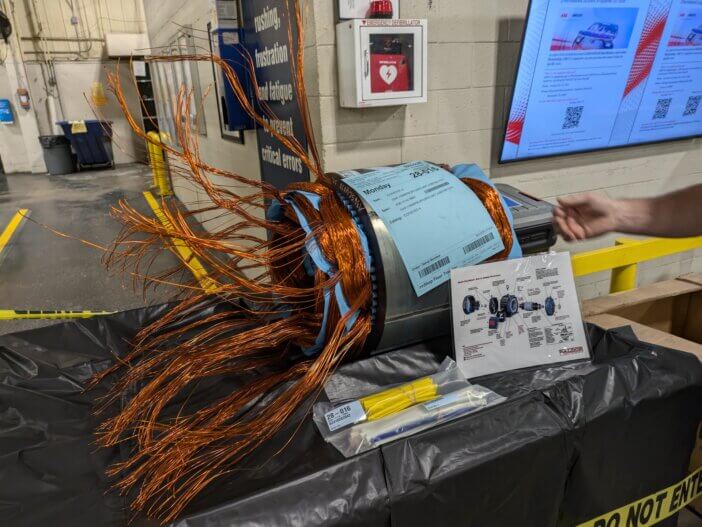
There’s one station where copper wire has to go into the motor. It literally means physically shoving wire into a housing, over and over. That job has always been done by human hands. Now there’s a machine that rams it in accurately every time.
That’s a good thing and a bad thing. In theory you could have three people doing that job. Now you need one person to operate the machine and check the work.
But I don’t think we want to go back to a world that requires three humans to wreck their bodies, for less money, to have a job. I’d rather we come up with new jobs and better training. Maybe I’m naive, but that’s how it struck me standing there.
What really got me is that the automation doesn’t stop. It was obvious that other stations on the line used to be manual too. You can see the progression – easiest to automate first, then the next one, then the next one, working its way down the line.
Which is why you hear rumors about “dark factories” – plants that run with no humans and therefore no lights. I think there’s still a lot in this industry, and plenty of others, that needs a person doing quality assurance.
But it’s a matter of time.
Why Cities & Politicians Love These Places
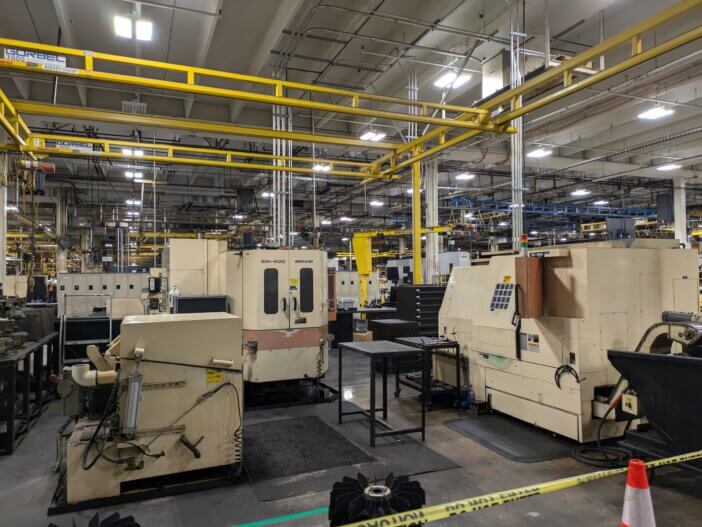
Manufacturing doesn’t bring the mass of jobs it used to. I still understand why politicians and cities chase it.
There’s a tangibleness to it. It’s a physical place, so it’s physically rooted in a community – you can’t move a building the way you move a server or a Macbook. And the job itself makes sense. You can explain it to somebody in one sentence. You can see where it goes: this station, then that station, then supervisor.
That’s rarer than it sounds. For a lot of young people trying to start a career, the path through the rest of the economy is basically unreadable. There’s no script of “do this well, then do that well, and then you will have succeeded”. Here you can see it.
Pride & Craft
Even with machines doing the worst of the work, the people on that floor are still making a tangible physical object.
There’s more pride and more craft to show off when you can point at a thing and say I helped make this. Writing and code are real work – I do both – but they don’t sit on a table where your kid can put a hand on them.
The whole reason for the open house is that the plant is growing and recruiting. And “factory” isn’t a sexy word right now. People default toward careers that seem more interesting, or at least more visible.
That’s a shame, because the hidden machines are the ones making the world go round.
If You’re Actually Looking for Work
The Athens plant is hiring and has been growing. If you’re in the Athens area – or Northeast Georgia generally – and want a career you can point at: Openings are posted on ABB’s careers site under the Athens, GA location. Search Baldor-Reliance as well, since older listings still use that name.