6+ Favorite Books on Financial System Critiques (So Far!)


Here is a roundup of my favorite books on financial system critiques (so far!). I hope you find something interesting & a little different.
-
 $11.93In The Ascent of Money, Niall Ferguson breaks down how historical events shaped our current financial system. He highlights that, despite its flaws, money has been a key player in human progress. I found his exploration of how financial institutions can lift countries like India and China out of poverty particularly compelling. The book emphasizes the necessity of financial education to tackle inequality and the unpredictability of crises. While it’s a bit lengthy, the writing is engaging and the topic is fascinating, making it a worthwhile read for anyone interested in finance and history.Buy Now Read My ReviewPros:
- Well-written and engaging topic
- Explains historical events leading to current financial systems
- Highlights the role of finance in reducing poverty and inequality
Cons:- It's a bit long.
I earn a commission at no cost to you when bought via this link. Also check your local library. Thank you!
03/16/2026 10:04 am GMT -
$15.95In 13 Bankers, Simon Johnson and James Kwak tackle the overwhelming power of the financial sector and argue for breaking up big banks to prevent future crises. They highlight how, despite the 2007-2009 financial meltdown, Wall Street remains largely unchanged, still benefiting from light regulation and concentrated power. I appreciated their detailed look at the crisis, especially since I lived through it as a lumber salesman and saw its impacts firsthand. Overall, this book is a must-read for anyone wanting to understand the financial crisis and its aftermath, though I didn’t find much to dislike about it.Buy Now Read My ReviewPros:
- The book presents a compelling narrative about Wall Street's power dynamics.
- It argues for breaking up big banks, challenging conventional wisdom.
- It provides useful insights into the financial crisis and its aftermath.
Cons:- Not a whole lot - good read on the GFC.
I earn a commission at no cost to you when bought via this link. Also check your local library. Thank you!
03/16/2026 11:02 am GMT -
$16.49In Confessions of an Economic Hitman, John Perkins shares his experiences working as an economic consultant, claiming he helped the U.S. exploit developing nations through deceptive loans. The book reads like a spy thriller, shedding light on how countries can fall into debt traps, a tactic still seen today with China's Belt and Road Initiative. However, I found Perkins a bit too self-important, presenting himself as a major player in global politics without strong evidence to back it up. While he highlights real issues, his grandiose claims detract from the book's credibility.Buy Now Read My ReviewPros:
- The book reads like a spy thriller.
- It provides insight into debt trap deals on the world stage.
- It highlights modern parallels with China's Belt and Road Initiative.
Cons:- The author comes across as overly self-important.
- His tone and lack of sourcing undermine the book's credibility.
- The scale of events he describes seems exaggerated.
I earn a commission at no cost to you when bought via this link. Also check your local library. Thank you!
03/16/2026 12:05 pm GMT -
$17.71In The Fish That Ate The Whale, Rich Cohen dives into the life of Sam Zemurray, a little-known banana mogul who had a huge impact on modern business practices and global politics. The review highlights how Zemurray’s story raises important questions about individual responsibility versus the effects of timing and circumstance. While his business strategies and public relations tactics were groundbreaking, they also led to complex ethical dilemmas, such as the consequences of corporate power and philanthropy. Overall, it’s an engaging read that blends entertainment with thought-provoking insights about our world today.Buy Now Read My ReviewPros:
- Engaging biography that tells an interesting story about Sam Zemurray.
- Raises important questions about individual responsibility and societal impact.
- Describes the evolution of public relations strategies that are relevant today.
- Offers insights into the complexities of modern global economy and historical events.
- Highlights the virtues of ambition and hard work while emphasizing context and consequences.
Cons:- No cons.
I earn a commission at no cost to you when bought via this link. Also check your local library. Thank you!
03/15/2026 09:01 pm GMT -
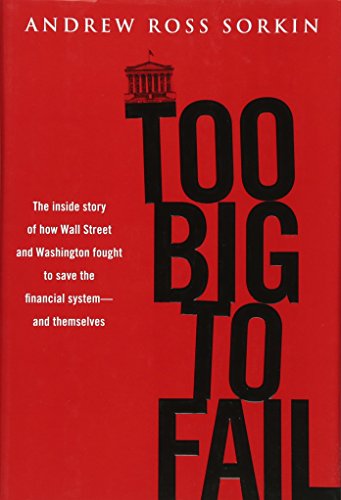
$43.00In Too Big To Fail, Andrew Ross Sorkin takes us through the chaotic events of the 2008 financial crisis, focusing on key figures like Dick Fuld and Hank Paulson. I found the book engaging and fast-paced, effectively connecting the dots of what I experienced firsthand during the crisis. Sorkin highlights issues like unchecked greed and the need for better regulation, making it clear how these factors led to the economic meltdown. While I appreciated the depth and insight, I did find some parts a bit overwhelming, especially for those unfamiliar with the crisis. Overall, it’s an eye-opening read that’s hard to surpass.Buy Now Read My ReviewPros:
- Engaging and fast-paced narrative
- Provides a comprehensive perspective on the 2008 financial crisis
- Highlights important themes like unchecked greed and the need for regulation
Cons:- The complexity of the GFC may confuse readers without prior knowledge.
I earn a commission at no cost to you when bought via this link. Also check your local library. Thank you!
03/16/2026 04:00 pm GMT -
$27.35In Freefall, Joseph Stiglitz takes a hard look at the roots of the Great Recession, challenging the idea that the U.S. needs to keep bailing out failing giants. He highlights how distorted incentives played a role in the crisis and discusses alternatives to the current economic setup, emphasizing the need for reform at the right pace. I appreciated his sharp arguments and clear writing, but I found the book's insights to have aged quickly, leaving me wondering how relevant they still are today. Overall, it's a thought-provoking read, but maybe not as timeless as I'd hoped.Buy Now Read My ReviewPros:
- The book is well-written and smartly argued.
- Stiglitz effectively critiques the need for bailouts and presents alternatives.
- It provides useful insights into the financial system and economic imbalances.
Cons:- The book aged quickly and may not have lasting takeaways.
- There are no other significant cons.
I earn a commission at no cost to you when bought via this link. Also check your local library. Thank you!
03/16/2026 12:06 am GMT -
$7.76I recently read The Devil's Financial Dictionary by Jason Zweig, a witty take on finance inspired by Ambrose Bierce's classic. The book is packed with humor and offers a surprisingly educational look at the complexities of the financial world. I loved its satirical bite, highlighting how convoluted and self-serving the industry can be. However, it does require some prior knowledge of finance to fully appreciate the jokes, which can be a bit of a hurdle. Overall, it’s a fun library read, but I wouldn’t rush to buy it for my shelf.Buy Now Read My ReviewPros:
- The book is funny and fast-paced.
- It offers educational insights into finance and investing.
- The dictionary format makes it easy to browse.
- The satire provides a biting truth about the financial industry.
Cons:- It requires a significant knowledge of the financial industry to fully appreciate the satire.
- The dictionary formatting can make reading tedious.
I earn a commission at no cost to you when bought via this link. Also check your local library. Thank you!
03/16/2026 03:00 am GMT -
$28.80In The World For Sale, Javier Blas takes a close look at the influence of a few powerful commodity trading houses on the global market. The authors, seasoned experts in natural resources, highlight how these traders link resource-rich nations to financial hubs, often amidst corruption and conflict. I was blown away by the book’s insights into how these traders shape economies and even government policies while engaging in some shady practices. It’s a real eye-opener about where our resources come from and the environmental impact involved. Honestly, I couldn’t find a thing I didn’t like about it—it's an engaging read filled with fascinating stories.Buy Now Read My ReviewPros:
- The book provides detailed insight into the commodity trading industry.
- The authors have extensive experience covering natural resources.
- It highlights the political influence of commodity traders and their impact on global trade.
Cons:- Nothing - it's fabulously written with jaw-dropping anecdotes.
I earn a commission at no cost to you when bought via this link. Also check your local library. Thank you!
03/16/2026 03:04 am GMT