Basic Writings of John Stuart Mill by John Stuart Mill

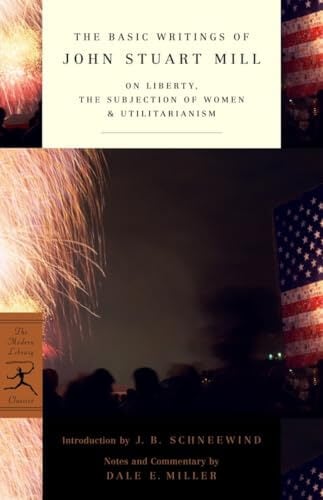
The Basic Writings of John Stuart Mill is a Modern Library compendium of Mill’s most famous works—On Liberty, The Subjugation of Women, Utilitarianism, and more. I bought it years ago for a college philosophy class and ended up keeping it, not because I reference it constantly, but because rereading essays like On Liberty reminded me of something important.
Liberalism—lowercase-l liberalism, the political philosophy—is weirdly new in the scope of human history. And it’s so powerful, so mundanely powerful, that we take it for granted.
When we argue about how our cities, states, or nation should be governed, this general commitment to individual flourishing is worth remembering. It’s worth fighting for, even when it feels obvious or boring.
Why Mill Matters
If you’re going to read one political philosopher from before the 1970s, Mill is probably your best bet. He’s the most readable and the most interesting, and unlike a lot of philosophers, he actually gets it.
What strikes me most is that Mill doesn’t plunge headfirst into pure consequentialism like his mentor Jeremy Bentham. He sees the tension between individual rights and democratic governance. How do you balance the will of the majority with rights that can’t be trampled? His answer: some rights must be unchangeable because protecting them is actually in everyone’s best interest—including the majority’s.
That tension—between democracy and rights—is still the fundamental question of modern politics. And Mill understood it better than most.
What I Liked
The Modern Library edition is a really good assemblage. Mill wrote books, but he also wrote tons of treatises and essays. Having them all in one place makes it much easier to digest his thinking.
Mill’s accessibility stands out. Political philosophy can be dense and academic, but Mill writes with clarity. Even when tackling heavy topics like liberty, justice, and women’s rights, he’s remarkably readable.
The ideas themselves hold up surprisingly well. His defense of individual liberty, his arguments against conformity, his insistence that society benefits when people are free to experiment and develop their own potential—all of this still feels urgent and relevant.
What I Didn’t Like
Mill has his problems. His philosophy is still very much a product of Victorian England, and he makes assumptions about progress and civilization that don’t hold up well today.
Oh also – TIL that large portions of it were written, not by John Stuart Mill, but by Hilary Taylor, who goes uncredited.
The book itself isn’t exactly day-to-day reading material. It’s valuable to have on the shelf, but most of Mill’s work isn’t something you’d casually pick up for entertainment.
Why This Matters
In an era when liberalism (again, lowercase-l) is under attack from all sides—when people question whether individuals should have rights that majorities can’t override, when democratic norms feel fragile—Mill is a useful reminder.
The philosophy of individual flourishing, protected rights, and limited government isn’t ancient or obvious. It’s relatively new, historically speaking. And it requires active defense.
You don’t have to agree with everything Mill wrote to appreciate that he understood something fundamental: the best societies are the ones that let people figure out how to live their own lives.
The Basic Writings of John Stuart Mill is a Modern Library compendium of his essential works including On Liberty and The Subjugation of Women. Mill remains the most readable pre-1970s political philosopher, offering clear arguments about individual rights versus democratic governance. His defense of liberalism—the commitment to individual flourishing and protected rights—feels mundanely powerful yet increasingly urgent. While dated by Victorian assumptions, Mill understood that the best societies let people live their own lives.
- Excellent Modern Library compilation puts Mill's best essays and treatises in one accessible volume
- Mill's writing is remarkably clear and readable compared to most political philosophers
- Core ideas about liberty, rights, and the tension between individual freedom and democracy remain deeply relevant today
- Mill's Victorian-era assumptions about progress and civilization don't hold up well
- Not exactly casual reading material despite being more accessible than most philosophy
- Some of his framework is limited by the consequentialist tradition he never fully escaped