5 Reasons You Should Use Mozilla Firefox for Your Browser

I’ve been watching the browser wars play out for over 20 years now. I watched Firefox beat Internet Explorer. I watched Chrome rise to dominance. And I’ve watched a parade of “Chrome alternatives” come and go – Brave, Vivaldi, DuckDuckGo, Opera, – all promising to be the privacy-focused, big-tech-free alternative we’ve been waiting for.*
*also, there is Safari, which has its own set of issues.
Here’s the thing: they’re all fine browsers. But they’re also all built on Chromium, which means they’re all built on Google’s code, following Google’s rules, playing Google’s game.
Chrome is great. I’m not here to trash Chrome. But if you actually care about an open web, about real privacy, about making sure one company doesn’t control the entire internet – Firefox is still the only real choice.
And yeah, I know Firefox has problems. Mozilla makes dumb decisions. Market share keeps declining. But for all its faults, it’s the last line of defense we’ve got. Here’s why I still use it, and why you should at least give it a try.
Firefox is the Last Line of Defense Against Browser Monoculture
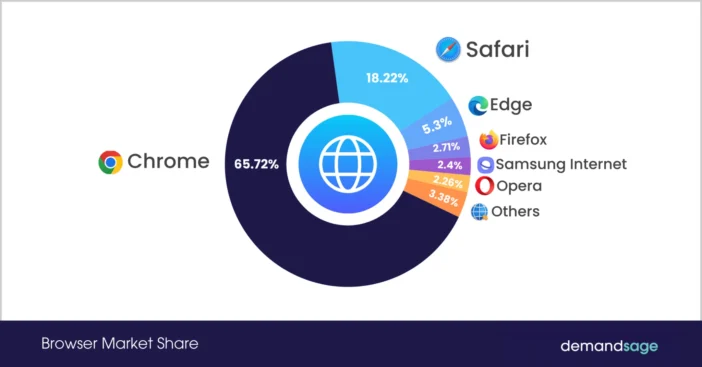
Let me be clear about what we’re dealing with: Chromium is the underlying project that powers Chrome. It also powers Microsoft Edge, Brave, Vivaldi, Opera, DuckDuckGo, and basically every other browser that’s trying to gain users.
They’re all Chromium under the hood. All of them.
The only independent browser engines left are Firefox (Mozilla’s Gecko) and Safari (Apple’s WebKit). And Safari only works on Apple devices, so it’s not really helping the open web – it’s just Apple’s walled garden.
That means it’s basically Chromium versus Firefox. And when one project has that kind of market share and is controlled by one company, they get to make the rules for the entire web. They decide what HTML and CSS features exist. They decide how websites actually work.
We saw this with Manifest V3, which Google pushed through despite massive pushback. It fundamentally changed how browser extensions work – and just happened to break ad blockers and privacy tools that were hurting Google’s bottom line. They claimed it was for security and performance, but the timing was awfully convenient.
Using Firefox isn’t just choosing a browser. It’s voting for a web that’s not controlled by one corporation.
Multi-Account Containers Are Genuinely the Best Feature
Every Chromium fork talks about their privacy features. And yeah, they’re all great in theory. But here’s the problem: we still live in the real world.
Your mom is on Facebook. Your sister posts on Instagram. Your job uses Microsoft 365. Sometimes you need to use the tracking-heavy internet that actually exists, and you can’t just break every site with aggressive blocking.
Firefox’s solution is brilliant: containers.
Each container has its own cookies, its own login state, its own tracking profile. Facebook can track me all they want inside that container, but they can’t see what I’m doing in my other containers. It’s like having five different browsers, but all synced to one account across all my devices.
I can be logged into three different Google accounts simultaneously – personal, work, and client – each in their own container, each completely isolated from the others.
No other browser has this built in. Chrome has profiles, but they’re clunky and don’t sync well. Brave has nothing. Vivaldi has nothing. This feature alone is worth the switch.
Extensions Actually Work Because Firefox Doesn’t Have a Conflict of Interest
Here’s where the Chromium problem gets real: Google controls the Chromium project. And Google’s business model is built on ads and data collection.
So when Google decides to “improve security and performance” by forcing Manifest V3 on everyone, and that change just happens to break uBlock Origin and other privacy extensions… well, that’s not a coincidence.
The Chromium forks can try to maintain compatibility with older extensions, but they’re not going to fork and maintain the entire browser engine forever. That’s not sustainable for a small team trying to run a profitable business.
Firefox builds the whole thing from scratch. Extensions are a core part of their mission, not a side feature they have to tolerate. They want extensions to work because they make the browser better, not because they’re afraid of user backlash.
When uBlock Origin had to create a separate “Lite” version for Chromium browsers because of Manifest V3, the full version kept working perfectly on Firefox. No compromises. No workarounds.
Mozilla’s Incentives Actually Align With Users
Let’s talk about incentives, because they matter more than marketing copy.
Google wants you in Chrome so they can collect data and serve ads. We found out during the U.S. Department of Justice antitrust case that Google uses Chrome browsing data to rank websites in search results. They want you in their ecosystem.
Brave kills ads and replaces them with their own ad network, paying you in cryptocurrency tokens. Which sounds less like a browser and more like a weird MLM scheme.
Vivaldi is trying to build a sustainable business by being feature-rich and customizable, which is great, but they still need to make money somehow.
Mozilla is a non-profit foundation. Their mission, legally, is to keep the internet open and accessible to all. Yeah, they make money from search deals and partnerships. Yeah, they make dumb leadership decisions sometimes. But those decisions are usually about maintaining independence, not about extracting value from your data.
Everything they do has an opt-in or an opt-out. When they added Pocket, you could disable it. When they added VPN services, it was optional. When they started exploring AI features, they built a small local model that runs on your device, not in their cloud.
Non-profits have their problems, but they don’t have the fundamental conflict of interest that for-profit browsers have.
Mozilla Invented the Modern Web
Firefox didn’t just show up yesterday. Mozilla has been fighting for the open web for decades.
They beat the original monopolist – Internet Explorer – back when Microsoft had 95% market share and was actively trying to kill web standards.
They invented most of the features we now take for granted: tabbed browsing, pop-up blocking, private browsing mode, web extensions, the modern developer tools. All Firefox innovations.
They opposed DRM in browsers when everyone else caved. They pushed back against government surveillance. They’ve been in every fight for user rights and open standards.
Even now with AI, they’re not going full Chrome and turning their browser into an AI assistant you can’t turn off. They’re trying to find a middle ground – small models that run locally, keeping your data on your device, with full opt-out options.
They’ve been doing this for over 20 years. I’ve seen plenty of browsers come and go in that time. Mozilla has outlasted them all, and they’ll probably outlast whatever new “Chrome killer” launches next month.
The Trade-offs Are Real But Worth It
Look, I’m not going to pretend Firefox is perfect.
It’s not as feature-rich out of the box as something like Vivaldi, which comes with email, calendar, notes, and an RSS reader built in. Firefox is just a browser.
Some websites are optimized for Chrome and occasionally break in Firefox. It’s rare, but it happens.
The extension ecosystem is smaller than Chrome’s, though every extension I actually need exists.
Market share keeps declining, and that’s a self-fulfilling prophecy – fewer users means fewer developers caring about compatibility means fewer users.
But here’s the thing about market share: it only goes up when people actually switch. And every person who switches makes the web a little more diverse, a little more resilient, a little harder for any one company to control.
What I Actually Use
I use Firefox as my default browser on my MacBook, my phone, and my work machine. Everything syncs seamlessly through Firefox Sync – tabs, history, bookmarks, containers, everything.
Extensions: uBlock Origin for ad blocking, Bitwarden for password management, FeedBro for RSS feed reading, and Multi-Account Containers.
The Firefox mobile browser is fast, lightweight, and actually supports extensions, unlike Chrome mobile.
I still keep Chrome installed for the occasional site that breaks, and for testing if I’m doing any web development. But 95% of my browsing is Firefox.
Try It For a Week
If you’re looking for a private browser, sure, go use Brave or Vivaldi or DuckDuckGo. They’re all fine.
If you want the default experience everyone else uses, Chrome is great.
But if you actually care about the open web, about real privacy, about making sure Google doesn’t completely control the internet – Firefox is the choice.
Install it. Put uBlock Origin on it. Set up containers for your Meta browsing and your work accounts. Install an RSS reader extension if you use feeds. Turn on Firefox Sync so your tabs sync between your computer and phone.
Use it for a week. See what you think.
The mobile browser is surprisingly good. The sync works flawlessly. The containers are legitimately the best browser feature I’ve used in years.
And yeah, you’ll be part of a smaller market share. But that’s kind of the point. Every person who switches makes the web a little bit better, a little bit more independent, a little bit harder for any one company to own.
Software benefits from scale. The more people use Firefox, the better it gets, the more developers care about compatibility, the stronger the alternative to Chrome becomes.
Mozilla has been fighting for the open web for over 20 years. They’ll keep fighting whether you switch or not. But it sure would be nice if they weren’t fighting alone.
Firefox remains the only major browser independent from Google's Chromium project, making it essential for maintaining an open web. Despite declining market share and Mozilla's imperfect leadership, Firefox offers unique features like multi-account containers, better extension support, and non-profit incentives aligned with users rather than advertisers. While it has trade-offs in features and compatibility, switching to Firefox actively resists browser monoculture and corporate control of web standards.
- Multi-account containers isolate tracking and allow multiple simultaneous logins
- Extensions work fully without Google's conflicts of interest (uBlock Origin, etc.)
- Non-profit structure aligns incentives with users, not ad revenue or data collection
- Less feature-rich out of box compared to browsers like Vivaldi
- Declining market share creates compatibility issues on some websites
- Smaller extension ecosystem than Chrome