5 Notes on Visiting Hamburg State Park

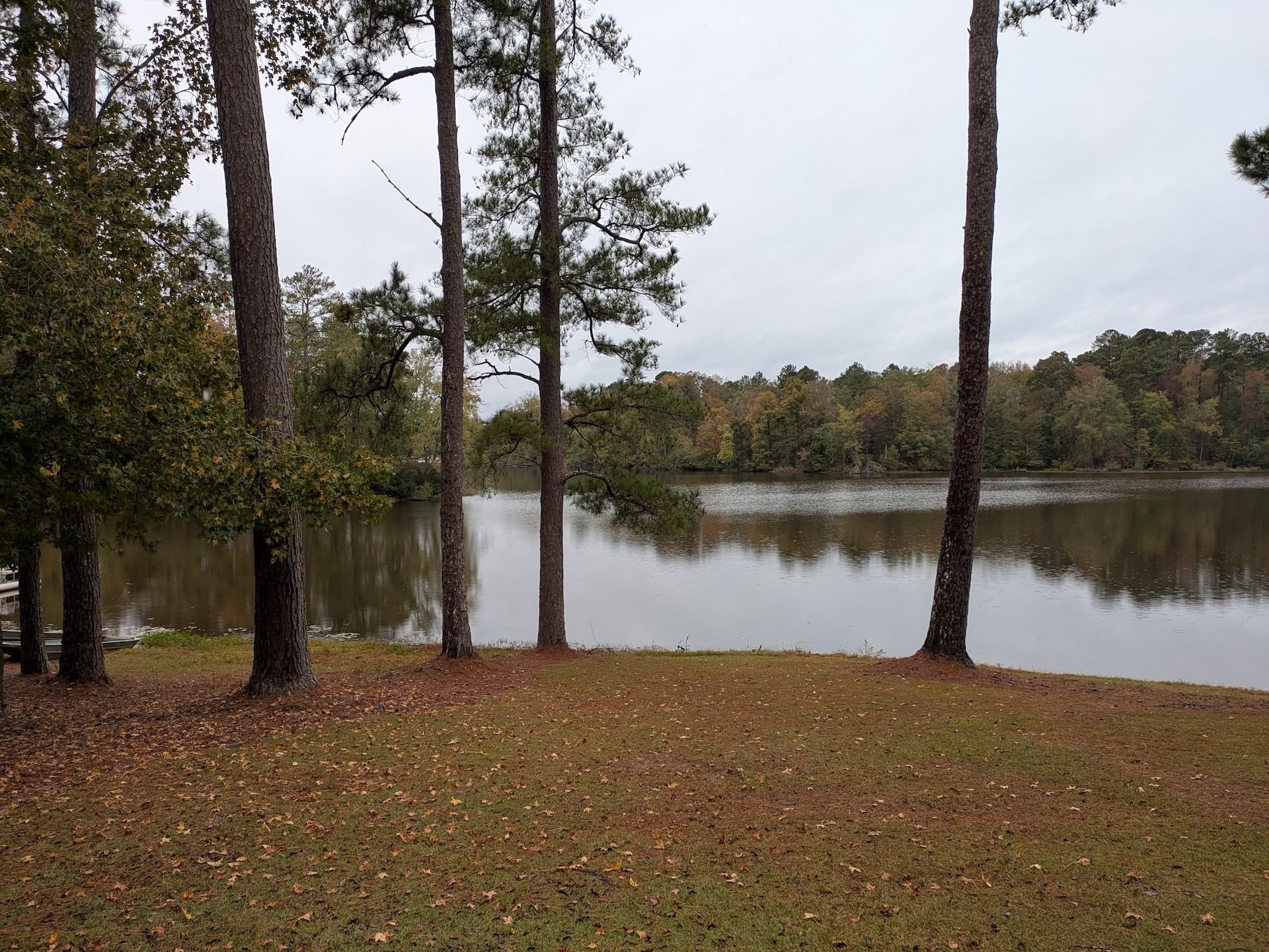
For years, I have been trying to book a campsite at Hamburg State Park. Every single time, it has been full.
That is a strange thing for a park nobody talks about. Hamburg never shows up on anyone’s list of the best parks in Georgia. It’s not in the North Georgia mountains. It’s not on the coast. It sits in east central Georgia, which is a part of the state most people don’t associate with a vacation at all. And yet it stays booked.
So I wanted to know what was going on.
In 2016, I started a project to make an extended visit or stay at every Georgia state park, and Hamburg had been a gap in the list for a long time. This past April, on the way back from spring break at the coast, I finally got to stop in and look around.
Here’s what I found.
1. The area is genuinely, remarkably quiet
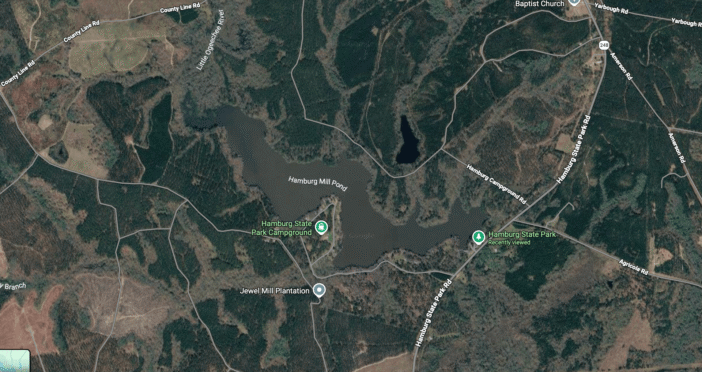
The land around Hamburg is developed, but it’s developed as tree farms and cattle pasture — agriculture that doesn’t require a lot of machinery or a lot of people. The result is a landscape that feels empty in the best way.
The highway running past the park is one of the quietest highways I have driven in Georgia. I did not see another car on it.
That runs against the stereotype that the scenic, quiet parts of Georgia are either up in the mountains or down on the coast. Hamburg is closer to town than plenty of North Georgia parks, and it is far quieter than most of them.
2. The campground is brand new — and that explains the booking problem
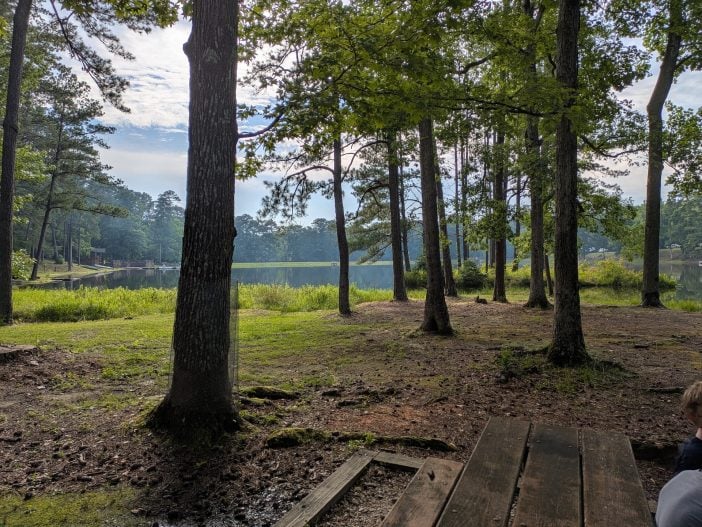
The day use area sits right along the highway. The campground is a separate drive around to the lake, far enough away that the two almost function as different parks.
The campground is new. New bathhouse, new tent pads, new RV pads. Georgia DNR did an excellent job on it. There are 32 sites at $36 a night, and it is clearly built with RV campers in mind.
Once I drove through it, the mystery was solved. A brand new campground on a scenic, quiet, well-stocked lake, at that price, is a hidden gem among RV campers – and RV campers talk to each other. Georgia residents can book 13 months out. Non-residents get a window just under a year. Between the early booking and the word of mouth, the sites are gone long before someone like me thinks to check.
Compare that to what you pay to fight for a spot at Cloudland Canyon, Fort Mountain, or Tallulah Gorge, and it isn’t a close call.
3. It is far more accessible than it feels
Hamburg is about 20 minutes off I-20, with GA Highway 15 and US 441 nearby as the major north-south routes.
That combination is unusual. You are far enough off the interstate to get real quiet and real dark, but close enough that getting there is nothing. You are also roughly halfway between Atlanta and Augusta.
This is the park’s biggest opportunity, and I don’t think it has been taken seriously yet. Hamburg is not a mountain destination and it is not a coastal destination. It doesn’t need to be. It is an outstanding stopover — the kind of place you break up a drive at instead of pulling into a chain hotel off an exit ramp.
4. The day use area needs help
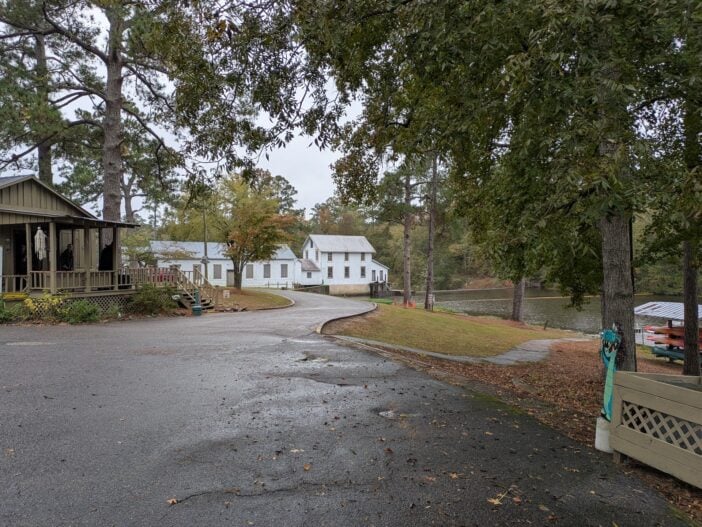
The main attraction at Hamburg is the mill: a 1920s grist mill, and one of the best remaining examples of that era of Georgia agriculture anywhere in the state. It’s locked up. You can walk around the outside, and there are guided tours inside on select weekends.
It is also in rough shape. So is the dock. The visitor center is small and old, and not old in the good CCC way – just old. It does not befit a state park in 2026.
I want to be fair here, because the Georgia DNR has done genuinely excellent work over the last 15 years. The cabin program started with Fort Mountain, Cloudland Canyon, and Hard Labor Creek back in the early 2010s and has worked systematically through dozens of parks since, most recently the rebuild at Bagby. It has been methodical and it has been good.
Hamburg is on the lower tier of that list. The campground investment shows the park isn’t forgotten, but the day use side hasn’t gotten its turn. Given that the mill is a legitimate piece of Georgia agricultural history sitting on a 225-acre lake with a boat ramp, fishing, and rentals, that seems like a miss.
5. It’s a satellite park, and that creates a chicken-and-egg problem
Hamburg is managed by A.H. Stephens State Park, a bigger and older park about 20 miles away. Reading the website, Hamburg comes across as something close to an extension of A.H. Stephens rather than its own operation.
In practice that means part-time staffing and limited staffed amenities. The clerk working the visitor center when I came through was helpful and great, but there’s only so much one person on a part-time schedule can cover.
The trail system is a good example. There are three trails covering a few miles. I hiked part of one and put eyes on another, but I ran out of time before I could do full loops. They’re worth more attention than they get.
So you end up with a chicken-and-egg problem. More visitors would justify more staff. More staff would bring more visitors. Right now neither side moves.
Worth the Stop
Hamburg State Park has excellent bones. A quiet rural setting that most people drive past on their way somewhere else. A 225-acre lake. A historic mill worth preserving properly. A trail system with room to grow. A brand new campground at a price that makes the crowded parks look silly.
What it needs is for the Georgia DNR to finish what it started at the campground and bring the same investment to the day use area and the mill.
Until then, stop in anyway. And if you have better luck than I’ve had with the reservation system, go camp there.
Get Posts Automagically
…also via RSS or Fediverse – just copy link & paste in your favorite reader :)