5 Notes on Visiting George L. Smith State Park

My family has an ongoing project to visit every state park in Georgia. This October, we based ourselves at Jack Hill State Park in Reidsville (formerly Gordonia-Alatamaha State Park) – but we also took a day to drive about an hour up the road to George L. Smith State Park.
We hiked, rented kayaks, paddled the lake, walked through the mill museum, and had a picnic. Here are my 5 notes.
1. The Park Is Beautiful, Small & Special
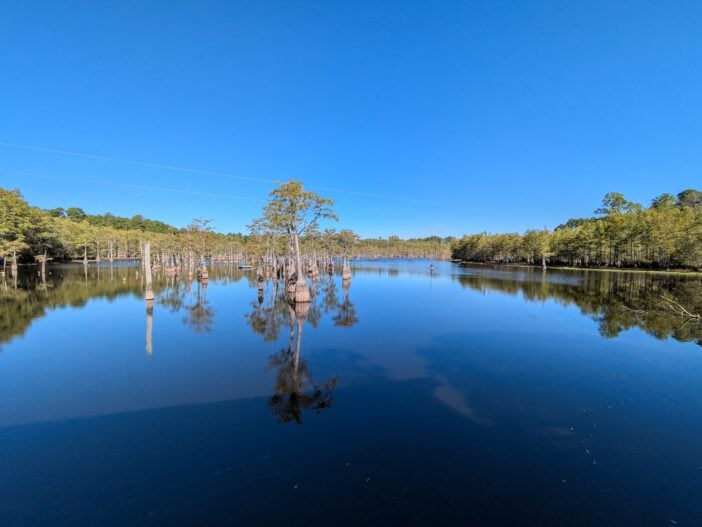
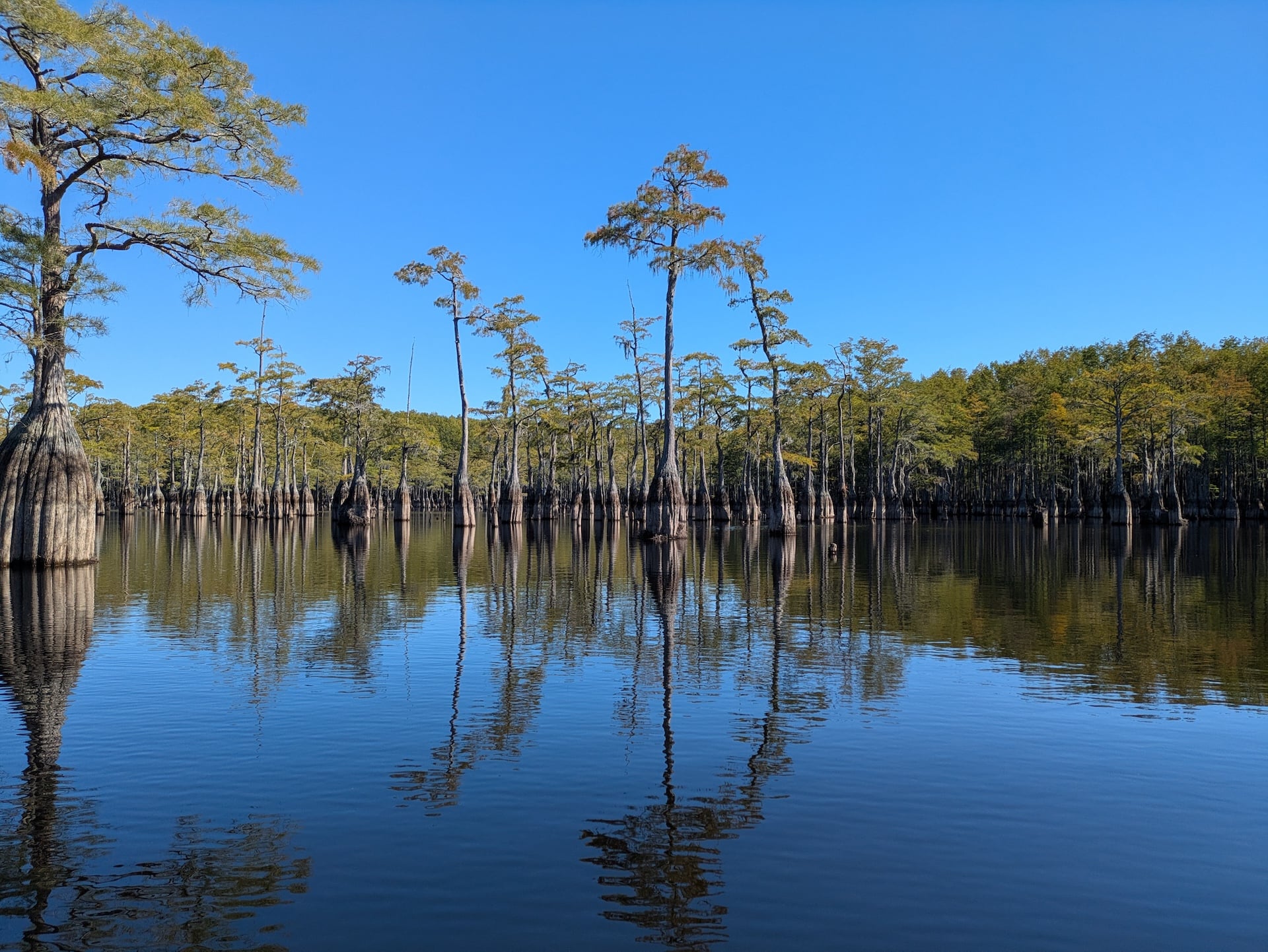
George L. Smith is centered around Parrish Mill Pond – a 400-acre reservoir created by an 1880s mill dam. But it’s not your typical Georgia lake. The whole thing is full of bald cypress trees.
The result is an enchanting landscape. Dark blackwater, cypress knees, Spanish moss, and narrow channels winding through the trees. It’s beautiful to look at from the shore, but it’s even better from a boat.
And the mill itself is a gem. The Parrish Mill is a gristmill, a dam, and a covered bridge – all in one structure. I’ve never seen anything quite like it.
2. It Pairs Perfectly with Jack Hill State Park
We stumbled into pairing these two parks together, but they really do work well as a combo.
Jack Hill is a unique state park in Georgia because it’s basically in the middle of a small town. It came out of a 1956 push where the General Assembly funded six new state parks. Reidsville got one of them – thanks in large part to the local Lions Club and a couple of families who donated land. It was built mainly for recreation rather than to preserve any particular landscape.
So Jack Hill has all the amenities. A golf course (with footgolf!), mini golf, a lake, hiking trails, really nice cabins, and a great campground. But you’re also…in Reidsville.
George L. Smith is the opposite. It’s small, but it’s rural. It’s surrounded by tree farms. It has blackwater, bald cypress, and sandy pine ridges with a much wilder, nature-y feel.
Stay at Jack Hill for the amenities. Drive to George L. Smith for the adventure. It’s a great setup.
3. The Park Should Be Bigger
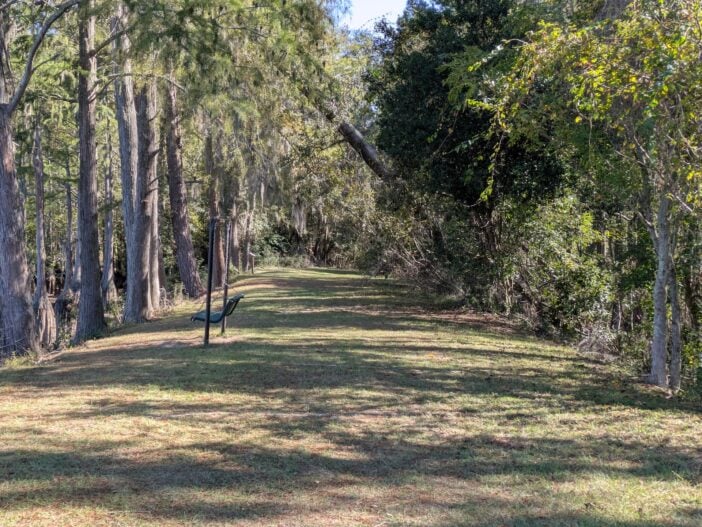
The park is 1,634 acres – but 402 of those are the lake. That leaves a fairly thin ring of land around the water, with tree farms pressing in on most sides.
On the drive in, we passed an active logging operation right on the road to the park. Not exactly the welcome you want before paddling through an ancient-feeling cypress swamp.
The surrounding landscape has been heavily worked for a long time. I get that. But I think it could be put to much better use with state conservation – most notably for water quality and wildlife (the sand ridges here are gopher tortoise habitat). A bigger footprint would also insulate the park from a lot of the industrial agriculture going on around it.
And it’s been done before! The state originally bought the land through the Heritage Fund in 1975 as Parrish Pond Recreation Area. It became a state park in 1980, then added a buffer in 1988 and another 266 acres in 1997 for a boat ramp, pioneer camping, a three-mile trail, and more cottages. Expanding the park isn’t a pipe dream – it’s a tradition that the Georgia Assembly should keep up.
This part of South Georgia doesn’t have a ton of public land, especially land open to general recreation rather than a WMA*. George L. Smith feels like a big opportunity just waiting for funding.
*Aside – WMAs (Wildlife Management Areas) are public land managed by the Georgia DNR primarily for hunting & fishing (because they are purchased with hunting & fishing license money). They’re great, but they come with seasons, licenses, and blaze orange requirements. State parks are the main way most families get outdoors on public land.
4. It’s Perfectly Kid-Adventurous
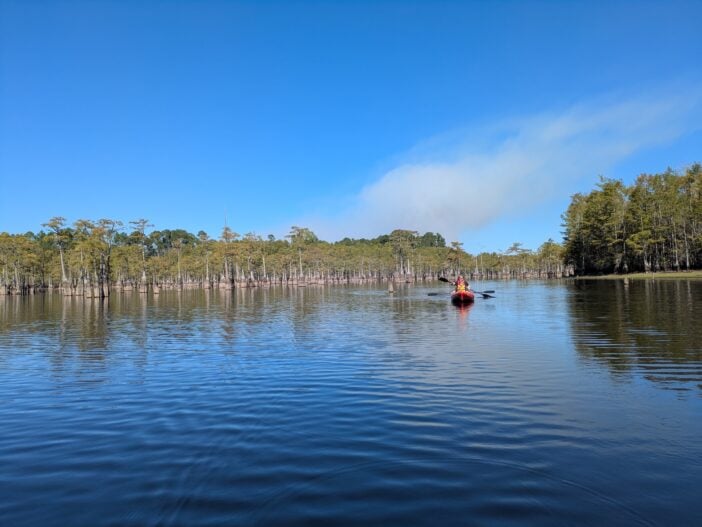
This park hits a sweet spot for kids. The trails are flat. The water is shallow with very little current.
That makes it a perfect place to get kids out in a kayak for a low-stakes mini adventure. The cypress trees mean you have to pay attention to where you’re paddling – there’s real navigating to do – but nobody is going to get into any real trouble.
Same goes for the trails. The sandy paths and tall pines make it feel much more remote than it actually is. My 9 and 13 year old both got a sense of exploring without me worrying about cliffs or swift water.
Add in a good picnic area and a playground, and it’s an easy, satisfying day.
5. The Mill Museum Deserves Some Investment
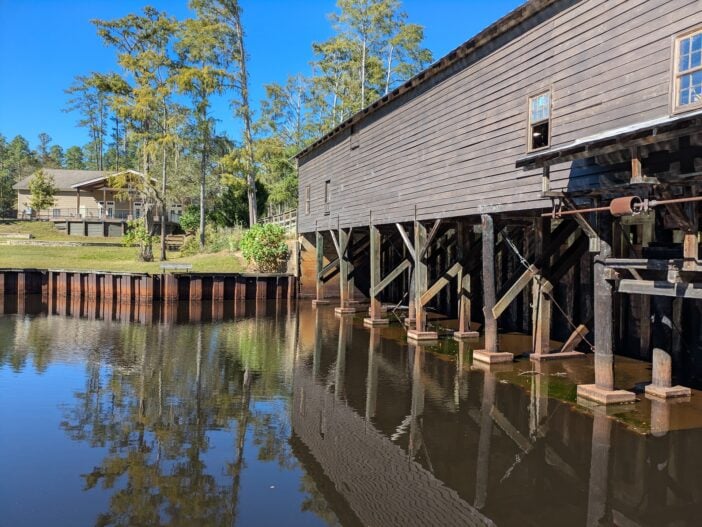
The museum is in the old mill itself, which sits on the dam as part of the covered bridge. It’s essentially an agricultural museum with lots of farming implements from early 20th century Georgia (think 1910s and 1920s).
It was genuinely fascinating. Two things surprised me –
First, the mule-drawn implements were way more complex than I expected. These weren’t simple plows. There was some serious engineering going on.
Second, the farming was much more mixed than I’d assumed. Cotton was the focus, sure. But it wasn’t only cotton – there was a much more diverse farm economy than the usual story of Georgia agriculture lets on.
But the museum could definitely use some investment. Better signage. A little more cleanup. More interpretive material and context.
And the mill only runs for demonstrations. It could be a fully working mill – like Mingus Mill in the Great Smoky Mountains, where you can watch it grind and buy the cornmeal.
The context is all right there. You’re standing in a 140-year-old mill! For most of Georgia’s history, the state was an agricultural economy where the local mill was a hub of community life. That story is fading fast, and this would be a perfect place to tell it.
Random Observations
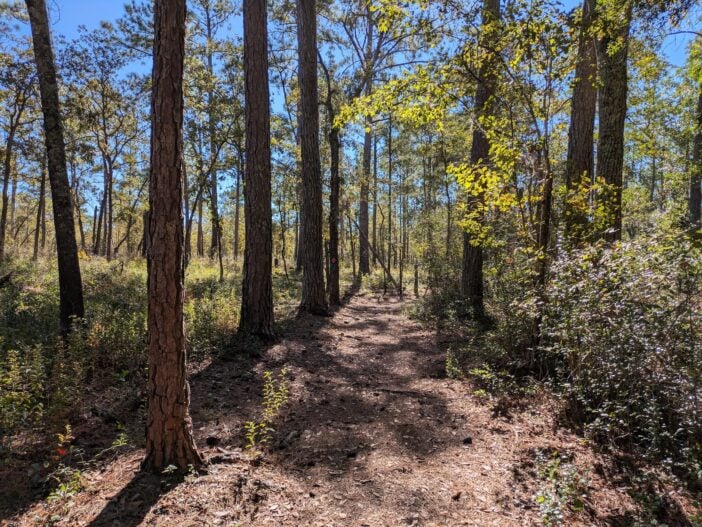
Go in October. Honestly, anywhere in Georgia is great in October – but especially here. I would not recommend July. Blackwater swamp + South Georgia summer = heat, humidity, and bugs.
Rent the kayaks. The cypress is the whole point, and you can’t really see it from shore.
Keep an eye out for gopher tortoise burrows on the sand ridge trails.
The park is very doable as a day trip from Jack Hill. It’s about an hour drive.
Wrap-Up
George L. Smith is small, it’s quiet, and it could use a little love from the state. But the bald cypress millpond and the 1880s covered bridge mill make it one of the most unique landscapes in the Georgia State Parks system.
If you’re in the area – especially with kids – it’s absolutely worth a day. And if you can, pair it with a stay at Jack Hill. Amenities in town, adventure an hour away. It’s a great combination.
Get Posts Automagically
…also via RSS or Fediverse – just copy link & paste in your favorite reader :)