No Nonsense Spirituality by Britt Hartley

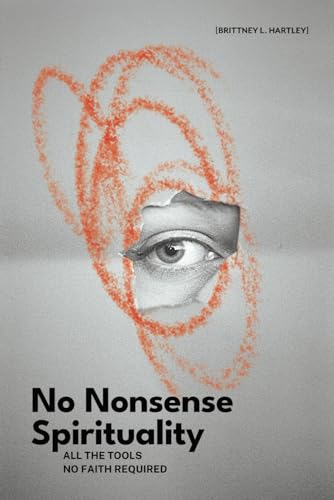
I picked this book up after hearing the author interviewed on a podcast — and by “picked up” I mean it was on sale on Amazon and seemed worth a quick read.
The book is aimed squarely at a growing slice of the American population: the “Nones.” People who’ve left an established church but haven’t exactly gone full atheist either. The spiritual-but-not-religious crowd. If you’ve been following any polling on American religious identity over the past decade, you know this is a bigger and bigger group.
Hartley herself is ex-Mormon and clearly well-read — both in academic religious studies and from within her own faith tradition. That background gives her a fluency and confidence when covering a pretty wide landscape of religious and spiritual practices. She doesn’t talk down to either side.
The closest comparison I can make is to the new atheists who were popular in the early 2000s — Dawkins, Hitchens, that crowd. They made a lot of the same arguments about organized religion, but with such a dismissive, almost contemptuous tone that they alienated as many people as they convinced. Hartley takes the opposite approach. It’s accessible, even-handed, and genuinely kind in its framing.
That said — the actual takeaways are things you could get from a decent blog post or YouTube video. If you’ve already spent any time with philosophy, religion, or even just a few good podcasts on the topic, you’re not going to find a lot here that surprises you.
Where the book does earn its place is as a jumping-off point. If someone you know is just starting to ask these questions — just beginning to navigate life outside a religious tradition — this is a solid, gentle first hand.
It’s a quick read. Worth picking up on sale if interested.
- Even-handed, accessible tone — refreshingly free of the new atheist contempt
- Author's ex-Mormon background gives her genuine credibility across traditions
- Quick, breezy read worth grabbing on sale
- Takeaways are available in any decent blog post or podcast
- Not much here for readers already familiar with philosophy or religion
- Thin on specific arguments or frameworks to chew on

Quotes
People who are too jaded for organized religion, too skeptical to be “all-in” to the world of woo-woo New Age spirituality, but also yearning for some-thing more than what cold skepticism has to offer. I realized I was not alone in my experi-ence of intuiting into this space, and per-haps this is where you find yourself too. And not just you, but millions of people in the West leaving organized religion but remain-ing hungry for something, or even looking back on times of religious community with a kind of melancholy longing. Deconstruct-ing felt like becoming increasingly enraged upon learning that your family was, in fact, the mafia, but also paradoxically missing the family spaghetti dinners.
Spirituality, in this case, means a deep con-nection to self and outside of self, with the insertion of the word secular here because we’re not deferring to the supernatural for any of this. In the past, faith and belief have been the hoops one has to jump through. Secular spirituality is the game of learning how to fall in love with existence itself with-out falling into the seductive traps of make-believe through the science of human well-being.
While I was too hurt to be drawn in by the language of God’s will anymore, the sci-ence of spirituality brought me back to all the things that I loved about the garden of religion that I had curated. It brought back ritual, awe, contemplation, transcendent experience, connection, prophetic voices, meaning, purpose, inner peace, and the wisdom I still value from Jesus, Buddha, or other wisdom teachers-all without re-quirements to believe the unbelievable.
There is an observable restructuring of the brain with a sustained personal spiritual path. The question for today isn’t “Is spir-ituality helpful,” it’s “How do we get access to these spiritual tools in a healthy way?” Science driven, or secular spirituality, seems to be the most effective path towards a spir-itual life that doesn’t make us internally roll our eyes. It can especially be a safe landing place for those with religious trauma.
“It is customary to blame secular sci-ence and anti-religious philosophy for the eclipse of religion in modern society. It would be more honest to blame religion for its own defeats. Religion declined not because it was refuted, but because it be-came irrelevant, dull, oppressive, insipid. When faith is completely replaced by creed, worship by discipline, love by habit; when the crisis of today is ignored because of the splendor of the past; when faith be-comes an heirloom rather than a living fountain; when religion speaks only in the name of authority rather than with the voice of compassion–its message becomes meaningless.”
Abraham Heschel
We are susceptible to giving that freedom to others who promise they know the way for us.
To be free means to be responsible for one’s life. Because of the overwhelming serious-ness and importance of this task, people fre-quently flee from the freedom and respon-sibility of determining one’s own path in life. We think of prophets and kings taking power but the reality is that we freely give them power. If all cult leaders died today, we would recreate them tomorrow because it’s so much easier to give your moral com-pass and life to someone else who seems trustworthy than to accept that you are ul-timately responsible for your own choices.
The paradox I’ve found is that the most spiritual atheist and the most decon-structed religious believer find themselves in a similar place. The difference between them is a hair, and maybe that hair is im-portant to either side, but it’s just a hair. The spiritual atheist builds a way of life from the ground up. The deconstructed believer may not believe anymore in a certain afterlife, or that there is only one God by which sal-vation comes, but showing up in the com-munity for service projects and reminders to be like Jesus gives their life meaning, community, and purpose. One comes from the side of order, and the other comes from the side of chaos, but they meet in the middle.
Perhaps, like thousands of gods on the ash heap of history, their reign needs to end. That process starts as we reject the notion that only men define what spir-ituality is.
From Gandhi, I learned that kindness and equality didn’t apply to his wife, whom he abused and controlled. In Christianity I learned that we sing hymns to praise the life-giving power of blood, but only when it is the blood shed by a man. A woman’s blood is unsanitary and unclean. The Buddha taught me about enlightenment, but that because women are roadblocks to tran-scendence, it is acceptable to leave your wife and child to go sit under the Bodhi tree. Ein-stein taught me about awe for the nature of reality and the God of Spinoza, but that his first wife deserves no mention in his foot-notes. Her place was to do his housework. Swami Vivekananda taught me about the spiritual unity of humankind, but also that it is only women who have the added tasks of being modest, pure, and submissive to their husbands. I learned about civil rights and non-violence through Martin Luther King Jr. in school, but that women were still sexual objects to him more than whole people. I attended hot yoga classes and through the teachings of Bikram Choud-hury learned about the mind, body, and spirit connection only to be devastated later on when it was uncovered that he was sexu-ally abusive to women behind closed doors. Mormonism, my first faith language, told me that God has spoken again to a prophet in the modern days and that this God de-manded polygamy. The teenage girls who were told to marry him or their families would go to hell were simply collateral dam-age to the Mormon God. I learned from the Dalai Lama about inner peace and simple living, but when he was asked if a female Dalai Lama should succeed him he said “She would not be of much use unless she was at-tractive.” When called out on this, he said it was just a joke. Muhammad in Islam gave me language for various parts of my soul but judged a woman’s soul as less valuable when it came to her autonomy, voice, or inherit-ance. Tolstoy taught me much about how to survive nihilism, but his wife Sofia’s diaries show a broken-hearted woman who had to suppress her own needs, life, and curiosities to serve a genius who cared more about dead philosophers than his own family. Catholi-cism taught me that the defense of the insti-tution, and defense of marriage, came be-fore the tears of women when men “do what men do.” And lastly, as a woman in the West, I learned that God, with male pronouns in our holy texts, is solely responsible for the creation of life, not the women who bear hu-manity and continue to die in childbirth.
While each of these spiritual paths had tools for me that I still benefit from, the cost was the underlying message to women that I subconsciously internalized: “Man decides what is spiritual and woman is less than.”
p. 110
Even though this is happening inside your own brain doesn’t mean it can’t be useful. There’s no need to check science or rationality at the door.
Myths are not mere fabrications but ra-ther symbolic representations of universal human themes and archetypes. They con-tain timeless wisdom and offer profound insights into the human condition. Myths can guide us in understanding the cyclical nature of life, the journey of self-discovery, and the perennial struggle between good and evil. In a secular context, these myths can be interpreted as allegorical narratives that inspire personal growth, ethical reflec-tion, and a deeper connection to the world, the self, and fellow beings.