5 Notes on Visiting Redwood National & State Parks


In June 2025, my family and I spent two full days (and three nights) in Redwood National and State Parks as part of a road trip through Oregon and Northern California.
I’d been looking forward to this one for a long time. I’ve been to several national parks, and every single one has managed to exceed my expectations. So for the Redwoods, I deliberately set my expectations sky-high.
Here are 5 notes from the trip – plus what I’d do differently next time.
1. The Trees. My Word, the Trees.
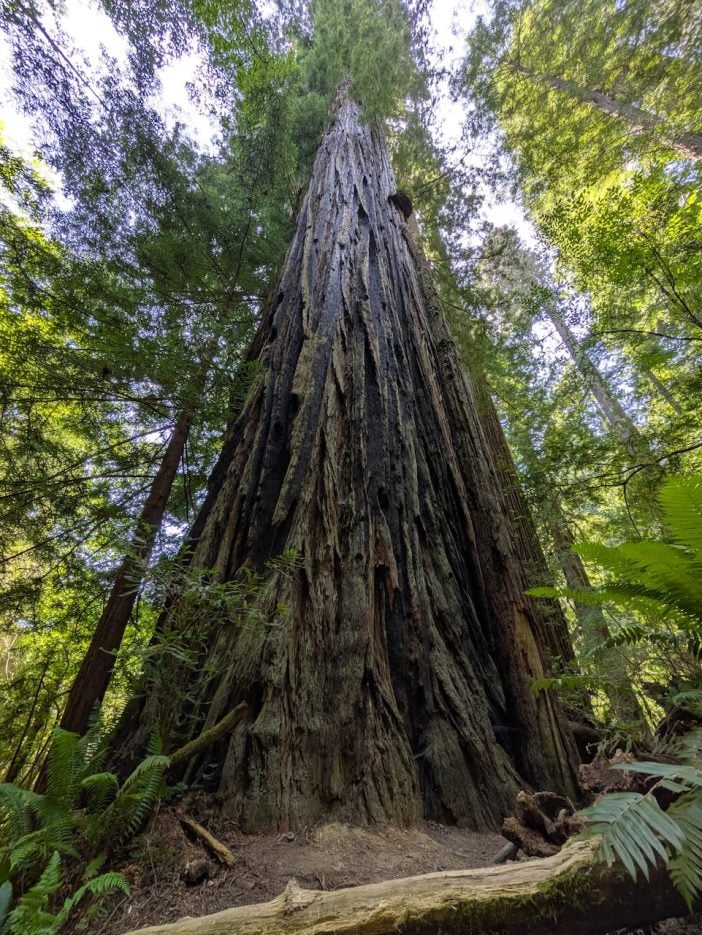
I’m fascinated by trees. And the idea of seeing the tallest tree species on Earth – in its native ecosystem – was a big deal for me.
Until this trip, the only redwoods I’d ever seen were at the Atlanta Botanical Garden. They have a dawn redwood in one area and a coast redwood in their evergreens-from-around-the-world section. The coast redwood is maybe 30 feet tall. You can kind of get a sense of it…but not really.
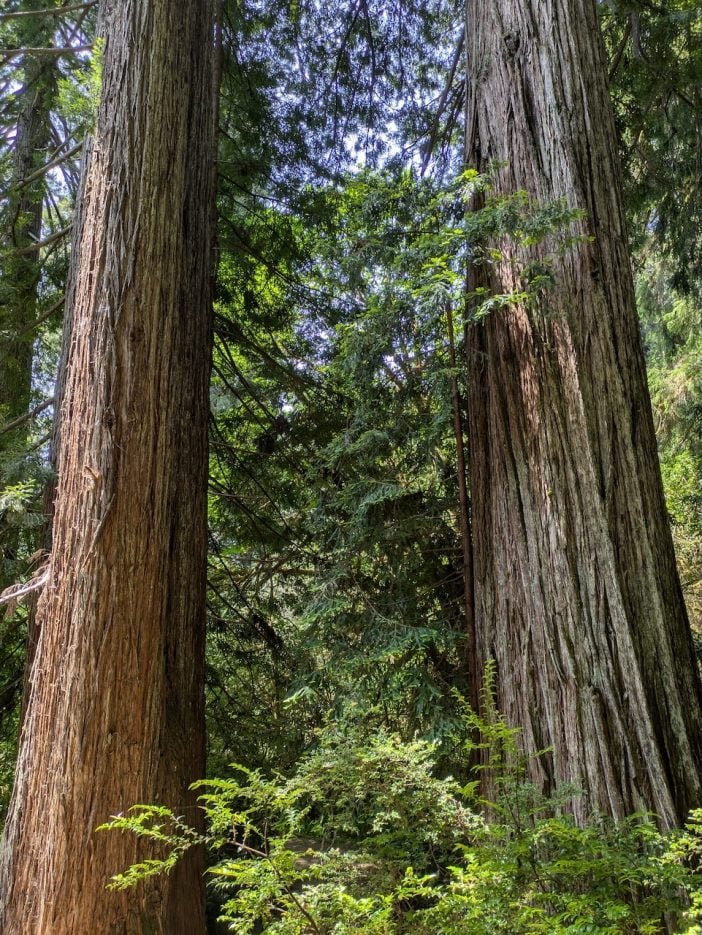
Standing at the base of an old-growth coast redwood (Sequoia sempervirens) is otherworldly. Except, of course, that they are very much of this world – right here in North America. Coast redwoods can grow well over 350 feet tall and live for more than 2,000 years.
In some ways, they’re too incredible for their own good. About 95% of the old-growth coast redwoods – trees that took thousands of years to grow – were cut down in a little over a century.
Redwoods do grow fast. There are plenty of redwood tree farms. But old-growth stature only comes from letting them grow for thousands of years. There’s no shortcut.
What got me most, though, wasn’t just the height. It was the age.
There’s a concept called a witness tree – a tree that stood over and “saw” historical events. There aren’t many things in the human or natural world where you can look at something and see the same thing that another human saw thousands of years ago.
Redwoods are a historical wormhole.
My home forests in the Appalachians have some of that. So do mountains, rivers, and other landscapes that have witnessed human history. But mountains aren’t alive. Redwoods are – still growing, still competing, still shaping their environment while they witness history.
The trees exceeded all expectations. Even the sky-high ones.
2. The Boundaries Are Confusing (Here’s Why)
Logistically, figuring out where the park actually is gets confusing. Actually, all of Northern California’s redwoods are confusing, because redwoods grow all over Northern California – in old-growth pockets, state parks, national park land, private land, and random city lots.
Here’s an example from our own trip. Kuchel Visitor Center, Lady Bird Johnson Grove, and the Trillium Falls Trail are National Park Service.
Prairie Creek Visitor Center and Big Tree Wayside are in Prairie Creek Redwoods State Park. Different agencies. Same continuous forest. Basically the same drive.
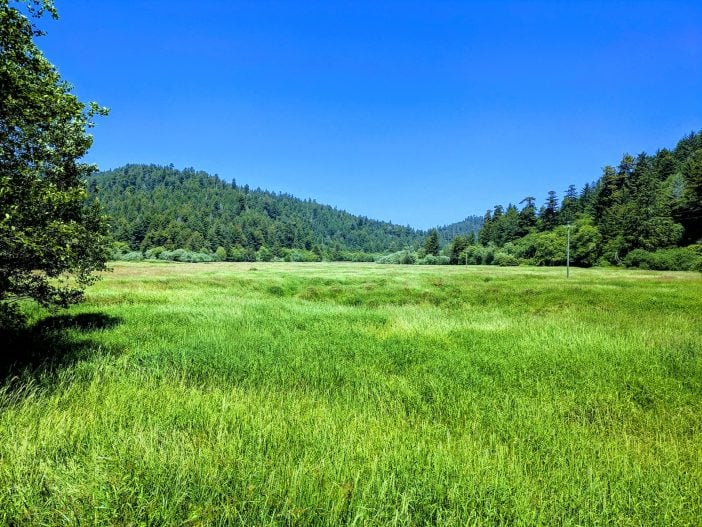
We also stopped by Jedediah Smith Redwoods State Park (part of the Redwood National and State Parks) and Humboldt Redwoods State Park (not part of Redwood National and State Parks, even though it’s home to the Avenue of the Giants and some of the most impressive groves anywhere).
Confused yet? The reason is history.
Quick aside on how the patchwork happened. Save the Redwoods League, founded in 1918, focused on saving specific trees and groves. Donors would literally fund the purchase of a grove – sometimes just the ground around a specific tree – and the logger would agree not to cut it. That’s why you can find old-growth redwoods scattered around in unexpected places.
That effort evolved into California establishing state parks. They were set up for recreation, but they also happened to save large groves. As the state park system got more popular and better funded, California added more of them. In Northern California, that meant a patchwork of state parks that doubled as redwood preserves.
Then in the 1950s and ’60s, several companies moved into truly industrial logging – massive, hyper-efficient operations. Conservationists realized that we weren’t just going to lose redwoods. We were going to lose the entire redwood ecosystem.
Redwoods are the apex flora species. They dominate the canopy. They define what the midstory and understory look like. And that, in turn, determines which wildlife shows up and how the whole forest works. Saving individual redwoods while clearcutting everything around them and wrecking the watersheds would be like saving the Parthenon and bulldozing the rest of Athens.
Given land prices, that’s when the federal government stepped in. Redwood National Park was established in 1968 – with First Lady Lady Bird Johnson as one of its biggest champions – to protect land along Redwood Creek that the Arcata Redwood Company was logging. The park expanded in 1978 to protect more of the Redwood Creek watershed. And it wasn’t until 1994 that the National Park Service and California State Parks agreed to co-manage the national park alongside Jedediah Smith, Del Norte Coast, and Prairie Creek state parks.
So a visit to “the” national park inevitably involves a lot of state parks. It’s a public lands jurisdiction puzzle.
My takeaway from learning about it on the ground: don’t get hung up on which agency owns which grove. Think about the trees – and then think about the trees as part of a larger redwood ecosystem that would not exist without them.
That was one of the biggest differences I noticed coming from the Southern Appalachians. In an Appalachian cove forest, dozens of hardwood species share the canopy. In an old-growth redwood forest, one species sets the terms for everything else.
3. The National Park Part Is Special
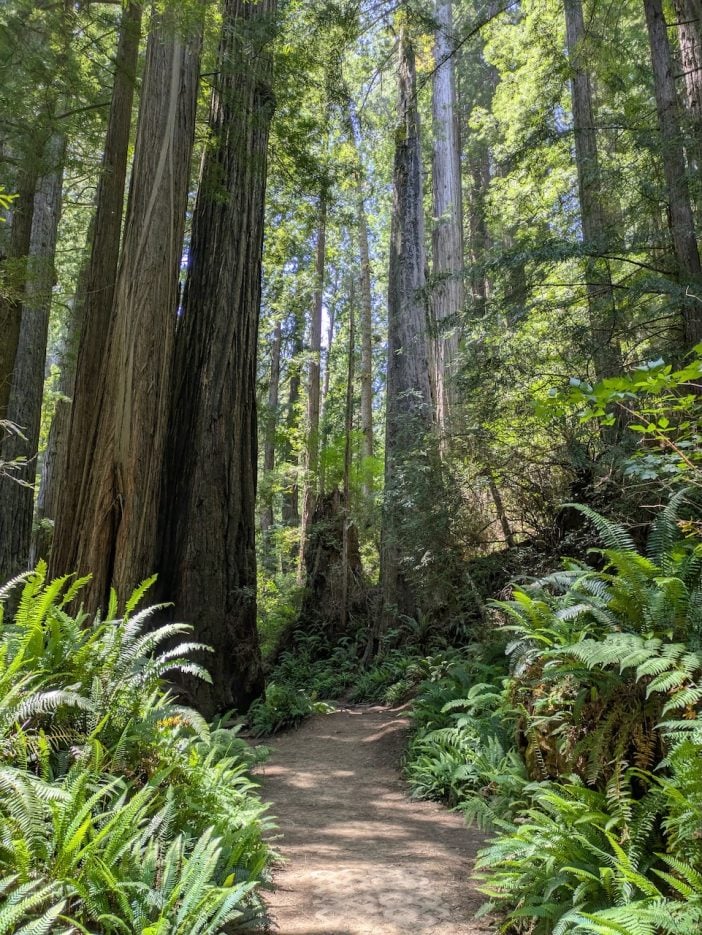
The state parks are very much of their time. They have a strong recreation focus – picnic areas, easy loops, visitor infrastructure – and California manages them very well.
But what I appreciated about the national park specifically is the sheer size of what was preserved, and the management of the National Park Service. The Redwood Creek area is one of the largest intact redwood ecosystems left.
On trails like Trillium Falls and Lady Bird Johnson Grove, it doesn’t take long to get away from the road and into continuous forest. And the further you go, the more you get a complete sense of how the ecosystem functions without heavy human management.
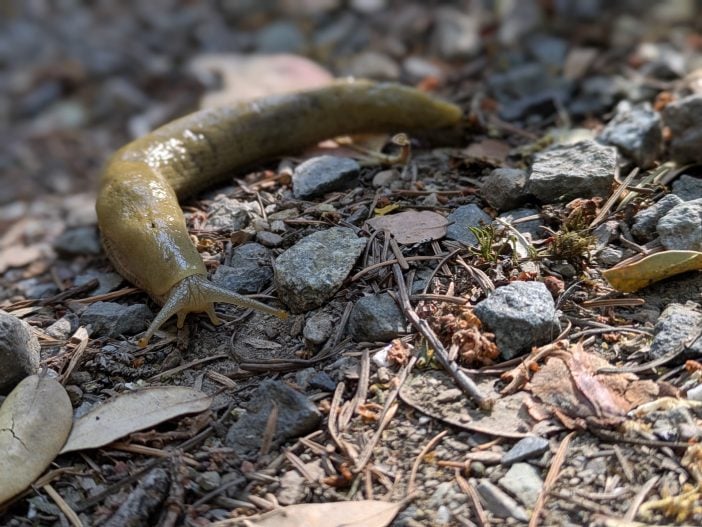
We didn’t see any Roosevelt elk (the park’s famous residents). But we did see banana slugs, which are every bit as bright yellow and ridiculous as advertised.
4. It’s Spread Out (and Driving Is Slow)
A lot of people see redwoods at Muir Woods National Monument, just across the Golden Gate from San Francisco. Redwood National and State Parks are a long way north of that.
Northern California is way bigger than I expected – even after looking at a map.
And because the Coast Ranges come right down to the ocean, the driving logistics get tricky. It’s basically Highway 101 up and down the coast. There aren’t many ways to cut back inland to get to lodging or amenities, mainly because there aren’t many amenities. Highway 101 is basically the only road…and it knows it.
We stayed at China Creek Cottages in Willow Creek, a tiny hamlet up over the mountains east of Eureka. It was supposed to be about an hour from Eureka. But construction and congestion added significantly to the drive each day – and there are no real alternate routes.
That said, the remoteness was exactly what I was wanting. A lot of this is just wild public land. It’s not built up or developed for big national park crowds.
5. There’s No Gateway Town
Which leads to the fifth note – there’s no true gateway city.
Crescent City in the north and Eureka in the south are substantial port cities from back in the logging days. But even they are pretty far from the heart of the best state and national park areas.
There also aren’t many opportunities to stay in the park. The park isn’t highly visited, and the area isn’t heavily populated.
It’s a different kind of national park visit. Some parks are so big that you have to stay inside them. Others are close enough to population centers that you can stay outside and drive in – the way most people do the Smoky Mountains. There’s no Pigeon Forge here, which is either a pro or a con depending on how you feel about Pigeon Forge.
Visiting the Redwoods requires some planning about where you’re going to sleep, where you’re going to eat, and where you’re going to hike.
If You Go (What I’d Do Differently)
- Stay closer to the coast. Next time, I’d stay in Eureka or Crescent City. Being out in a rural area was genuinely nice, but the drive time really added to the day.
- Consider the cabins. There are cabins closer to the parks and even on inholdings within them. They’re very expensive…then again, given how much time we spent driving, they might have been worth it.
- Plan your food. Don’t assume you’ll find somewhere to eat near the trailhead. You probably won’t.
- Pick your jurisdiction battles. Grab a map (or an app like Gaia) that shows both the national and state park units. It’ll save you a lot of “wait, are we in the park?” conversations.
Wrap-Up
We had two full days, three nights, and perfect June weather.
I set my expectations deliberately high for this trip. The Redwoods cleared them easily.
The park takes more planning than most – confusing boundaries, long drives, and no gateway town to fall back on. But the reward is standing in a forest that has been growing, competing, and witnessing history for thousands of years.
If you’re weighing whether it’s worth the trip – it is. Just book your lodging closer than we did.
Get Posts Automagically
…also via RSS or Fediverse – just copy link & paste in your favorite reader :)