Mythology by Edith Hamilton

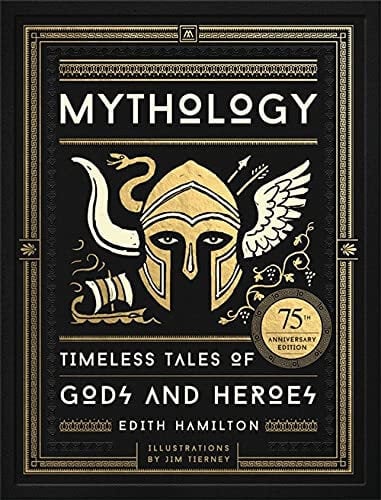
Mythology by Edith Hamilton is a collection of Greek, Roman, and Norse myths that have been retold from various sources. The book covers the gods, creation, and earliest heroes, stories of love and adventure, the great heroes before the Trojan War, the heroes of the Trojan War, the great families of Mythology, the ‘less important’ myths, and the mythology of the Norsemen. The book is like a study guide in itself because it references so many different stories and characters.
The main themes of the book are the idea of fate and its overwhelming power, the theme of war as an inevitable part of existence, the theme of love as examples of loyalty, trust, and eternal love, the theme of heroes depicting marvelous achievements of virtue, strength, and honor, and the theme of the underworld as an expression of cultures for death and morality. The book also offers valuable life lessons such as courage, determination, jealousy, love, faithfulness, etc., which can help us understand our behavior better. By studying these stories, we gain a greater understanding of human nature and how to navigate life’s challenges.
Useful takeaways from the book include gaining knowledge about ancient Greek, Roman, and Norse mythology, understanding the common themes and motifs in these myths, and learning valuable life lessons that can be applied to modern-day situations. The book is frequently used in high schools and colleges as an introductory text to ancient mythology and belief. Overall, Mythology by Edith Hamilton is a must-read for anyone interested in ancient mythology and its relevance to modern times.
What I Liked
Great read – and, like the Bible and Shakespeare, this book makes so much of our culture make more sense.
What I Did Not Like
Nothing – great read.
- Comprehensive coverage of Greek, Roman, and Norse myths
- Offers valuable life lessons applicable to modern situations
- Enhances understanding of culture and human nature
- Nothing - great read.

Quotes
Amos, a difficult word to translate, but in common use among the Greeks. It means reverence and the shame that holds men back from wrongdoing, but it also means the feeling a prosperous man should have in the presence of the unfortunate-not compassion, but a sense that the difference between him and those poor wretches is not deserved.
In memory of the Golden Age, when he reigned in Italy, the great feast of the Saturnalia was held every year during the winter. The idea of it was that the Golden Age returned to the earth during the days it lasted. No war could be then declared; slaves and masters ate at the same table; executions were postponed; it was a season for giving presents; it kept alive in men’s minds the idea of equality, of a time when all were on the same level.