Ancient Rock Formation in the Cohutta Wilderness

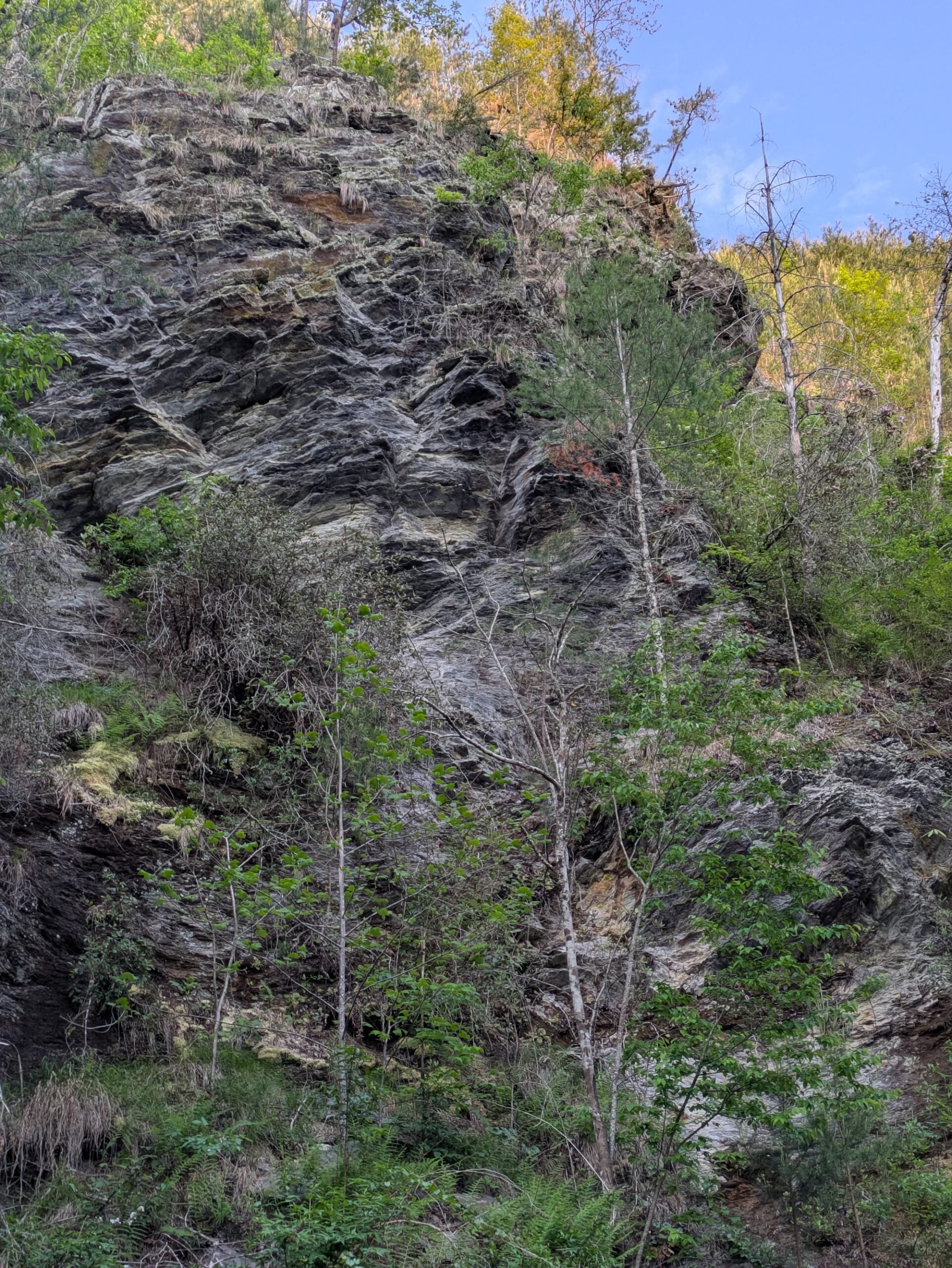
The Cohutta Wilderness protects some of the oldest land in North America as part of the Ocoee Supergroup.
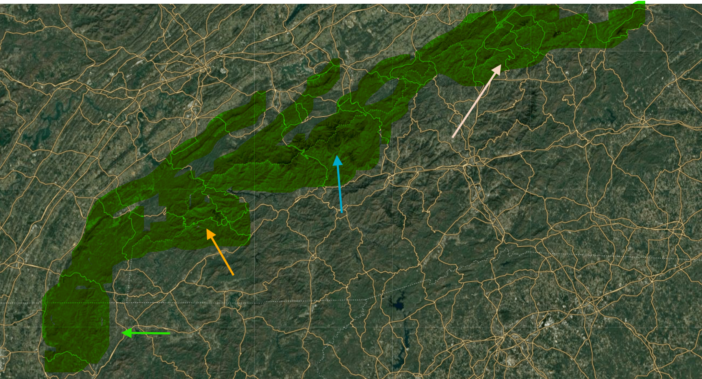
I love how, especially along the Conasauga and Jacks Rivers, you can see just incredible rock formations that simply don’t show up in the Blue Ridge that most folks associate with the southern Appalachians.
More details, according to Claude…
What You’re Looking At
This is almost certainly Ocoee Supergroup metamorphic rock — most likely phyllite or slate, possibly with some metasandstone layers. These are among the oldest rocks in Georgia, dating to the Neoproterozoic era, roughly 700–800 million years ago.
Key Features Visible in the Photo
- Dark, foliated rock with clearly visible cleavage planes — classic phyllite/slate texture
- White streaking veins cutting through the dark rock — these are quartz veins that intruded during metamorphism and tectonic deformation
- Wavy, contorted layering — shows intense folding from ancient mountain-building events
- Rust/orange patches — iron oxidation (limonite/goethite) from weathering of iron-bearing minerals
- Steeply tilted layering — the original seafloor sediments have been dramatically rotated by tectonic forces
The Geologic Story
These rocks were originally deep-sea mud and sand deposited in the rifting proto-Atlantic Ocean (called the Iapetus Ocean) as the supercontinent Rodinia broke apart. They were then:
- Buried deep and metamorphosed (heat + pressure turned shale → slate/phyllite)
- Intensely folded and faulted during the Taconic and Acadian orogenies (Paleozoic era)
- Thrust westward as a massive sheet of rock riding over younger rocks below
Disclosure – produced by Claude AI