The City and Its Uncertain Walls by Haruki Murakami

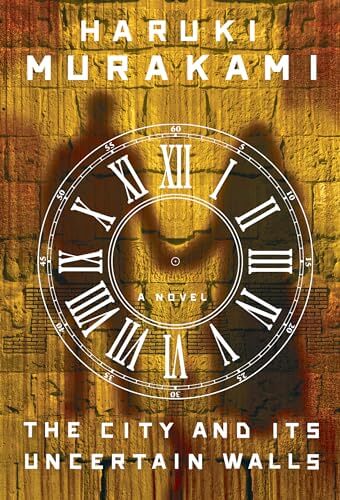
I’ve been a Murakami fan for years. I’ve read most of his major works and loved the surreal, dreamlike quality he brings to his stories. So when The City and Its Uncertain Walls came out in 2023 (English translation in 2024), I picked it up expecting another journey into his signature blend of magical realism and emotional depth.
Instead, this became the first Murakami novel I didn’t finish.
I made it about two-thirds through before I started skimming. Eventually I skipped ahead to confirm the ending was headed exactly where I suspected. It was.
What Didn’t Work
The core problem: the metaphor at the heart of the book is beautiful but completely transparent from page one. And then Murakami spends 400+ pages building it, explaining it, re-explaining it, and circling back to explain it again.
In his best work—Kafka on the Shore, The Wind-Up Bird Chronicle, Norwegian Wood—the surreal elements remain elusive enough to keep you engaged. You’re never quite sure what’s metaphor and what’s literal, and that ambiguity creates tension.
Here, there’s no ambiguity (at least, not to me?). The walled city is clearly [metaphor for isolation/memory/whatever it represents for you], and every subsequent page just reinforces what you already understood in chapter two.
It’s also his longest and slowest novel. Murakami’s pacing has always been deliberate, but this felt glacial. Scenes that should have taken five pages stretched to twenty. The repetition that usually creates a hypnotic effect just made me impatient.
The 1Q84 Problem
This book got major press—the kind of attention Murakami hasn’t had since 1Q84. And that comparison is apt, because 1Q84 was another book that didn’t work for me. Both feel like Murakami writing at his usual themes rather than through them. Both mistake length for depth.
If you loved 1Q84, you might love this. If you found 1Q84 tedious, skip The City and Its Uncertain Walls.
Who Might Still Enjoy It
If you’re a completist Murakami reader, you’ll probably read it anyway. And there are moments of his usual beautiful prose—descriptions of music, food, quiet moments of connection. The writing itself is never bad.
It’s also possible this book will resonate more with readers at a different life stage. Maybe I’ll come back to it in ten years and find something I missed. But right now, I’d rather reread Hard-Boiled Wonderland or Sputnik Sweetheart.
I still love Murakami as a writer. Just not this particular book.
Murakami's The City and Its Uncertain Walls was a major disappointment. The central metaphor is beautiful but obvious from the start, and the 400+ pages just rehash the same themes without the ambiguity that makes his best work compelling. It's his longest and slowest novel, similar to 1Q84 in mistaking length for depth. Despite lovely prose moments, it's my first unfinished Murakami.
- Beautiful prose in moments (descriptions of music, food, quiet connections)
- The central metaphor is aesthetically lovely
- May resonate with readers at different life stages
- Central metaphor is obvious from page one and endlessly rehashed
- Longest and slowest pacing in Murakami's catalog
- Lacks the ambiguity and tension that makes his best work compelling