Practical Mysticism by Evelyn Underhill

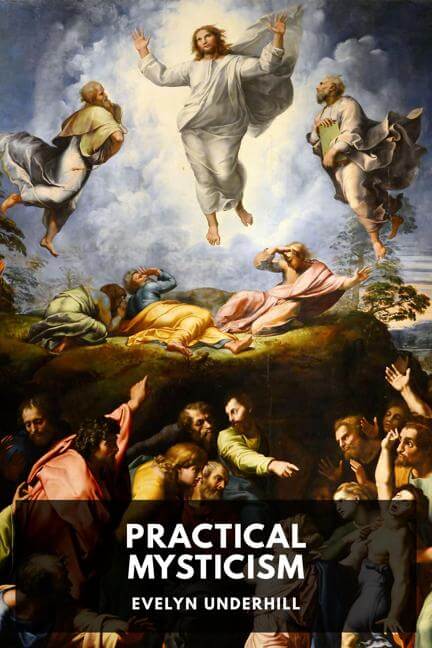
Practical Mysticism by Evelyn Underhill is a 1914 book on Christian mystical practice. It’s available for free on Standard Ebooks, which is one of my favorite resources on the internet for beautifully formatted public domain books.
I picked this up as part of a cluster reading on neuroscience and cognitive science that included Behave by Robert Sapolsky and I Am a Strange Loop by Douglas Hofstadter…that all came right after a cluster read on Christianity.
Reading about the brain always reminds me of that J.B.S. Haldane quote: “The universe is not only queerer than we suppose, but queerer than we can suppose.” The brain is that way. Even though we understand the mechanics of how neurons fire and chemicals move around, the way consciousness arises from all that biological machinery is genuinely bizarre.
I’m fascinated by how we can manipulate our own brains. I’m a daily caffeine user like billions of other people. I’ve experienced runner’s high. I’ve done basic breath meditation practice. I’ve read about actors who can shift their entire mental state to inhabit a character. All of these are examples of consciously changing your brain chemistry and neural patterns.
What interested me about Practical Mysticism specifically is that it’s in the Christian Western tradition rather than the Eastern tradition. A lot of the advanced meditation and mystical practices I’ve encountered are Buddhist, Taoist, or Hindu. Since I was raised deeply in Christian culture, I wanted to understand how mystics in the Western tradition approached these same practices. How did someone like Hildegard von Bingen or Theresa Avila manipulate consciousness? What techniques did they use? What’s going on there? And what commonalities are shared across Eastern, Western, and Secular mindfulness traditions?
What I Liked
The book is accessible and free. You can read it on Standard Ebooks or throw it into ChatGPT or Claude to get summaries if the 1914 prose style is too much.
It provides a window into Western mysticism, which is genuinely under-explored territory. There are a few people writing about it—Anthony DeMello comes to mind—but it’s a small group. Western mysticism crosses over into New Age territory and is often condemned by mainstream churches**, so you don’t get a lot of serious, accessible, non-woo-woo writing about Christian mystical practice.
**the reasons get very obscurantist among Catholic, Protestant, and Orthodox writers, even though it’s a fascinating topic in itself in how beliefs get censored & shaped across generations. FWIW, the church fathers Origen & Augustine were very mystic-adjacent and I don’t know what was going on with John of Revelation – but that whole deal definitely involved either psychedlics or some Level 6 meditation.
But either way! The connection between historical mystical practices and modern neuroscience is fascinating. We’re essentially talking about the same thing—conscious manipulation of default mode networks, attention, and brain states—but from completely different frameworks.
What I Didn’t Like
The book is probably 70% fluff and 30% actual tactics. It’s written in that 1920s overly-elaborate style that takes three paragraphs to say what could be said in three sentences. But, then again, the fluff is also par for the course for pretty much any mystical handbook – it’s all very dense.
I wish there were more concrete practices. The book talks about mysticism more than it gives you specific things to do. For someone looking for actual techniques, it’s frustrating. But, then again, everyone sounds insane whenever they describe just their daily thought patterns.
It’s also pretty dense in places, which is ironic for a book called “Practical” Mysticism.
Takeaways
Meditation and contemplative practices are trendy right now, and I don’t think that trendiness is going away. If anything, it’s accelerating in the face of uncertainty, access, and the general zeitgeist. Understanding how Western mysticism intersects with secular neuroscience and Americanized Eastern practices is useful context.
The book is worth reading if you’re specifically interested in Christian mystical traditions or want historical perspective on contemplative practice. But if you’re looking for a practical guide to actually developing a meditation or mystical practice, you’re better off with modern resources that are more direct about techniques.
For me, it was interesting background reading that filled in some gaps about the Western tradition. But I’m still looking for better resources that combine the Christian mystical tradition with concrete, accessible practices.
Practical Mysticism by Evelyn Underhill is a 1914 book on Christian mystical practice, available free on Standard Ebooks. The author explores Western mystical traditions as an alternative to Eastern meditation practices. While it provides valuable historical perspective on how Christian mystics approached consciousness manipulation, the book is 70% fluff and 30% tactics, written in dense 1920s prose with limited concrete practices.
- Free and accessible on Standard Ebooks
- Fills gap in understanding Western/Christian mystical traditions
- Interesting historical perspective on consciousness and contemplative practice
- 70% fluff, 30% actual techniques
- Dense 1920s writing style
- Lacks concrete, practical exercises