Oedipus at Colonus by Sophocles

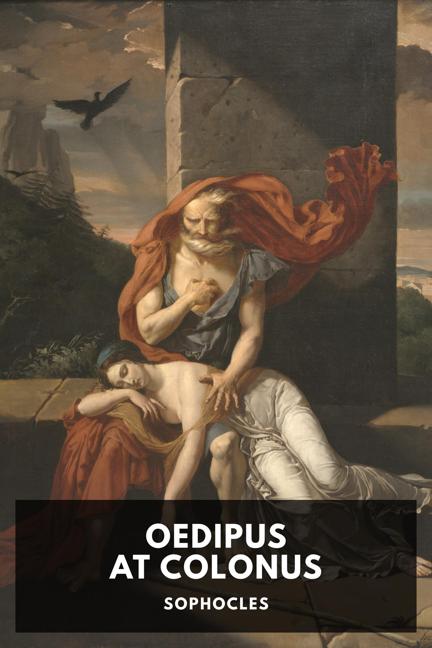
I picked up Oedipus at Colonus from Standard Ebooks as part of the Theban Trilogy, along with Antigone and Oedipus Rex.
Among the three plays, I had actually never heard of Oedipus at Colonus—even though it’s supposedly part of the trilogy. And after reading it, I understand why it’s not as well-known as the other two.
Oedipus at Colonus is the middle play chronologically, set between Oedipus Rex (where Oedipus discovers he killed his father and married his mother) and Antigone (where his children deal with the aftermath). It follows the blind, exiled Oedipus as he arrives at Colonus, near Athens, at the end of his life.
The play is available for free from Standard Ebooks, along with the rest of the trilogy.
What I Liked
The characters and setting are interesting. Seeing Oedipus as an old, broken man rather than the proud king adds depth to the character. The mythology and the mechanics of Greek tragedy are still compelling to watch unfold.
And like all Greek literature that’s survived 2,400+ years, there’s something inherently fascinating about the fact that it’s still around at all.
What I Did Not Like
Unlike Antigone or Oedipus Rex, this play doesn’t deal with universal themes in the same way. Those plays ask timeless questions about fate, justice, family loyalty, and the limits of human knowledge—questions that still resonate today.
Oedipus at Colonus, on the other hand, feels much more like Athenian propaganda. There’s a lot going on that is clearly of its time rather than universal. The play spends considerable energy glorifying Athens and Colonus specifically, with Oedipus praising Athenian virtue and the sacredness of the grove where he’ll die. It’s easy to see how this would have played to an Athenian audience, but it doesn’t translate as well across millennia.
Where Antigone wrestles with whether we should obey unjust laws, and Oedipus Rex explores whether we can escape fate, Oedipus at Colonus is more interested in local politics and civic pride.
Wrap-up
Oedipus at Colonus has value as a historical artifact and for understanding the complete arc of Sophocles’ Theban plays. But it’s much more of a historical curiosity than a timeless work of literature.
If you’re reading the Theban plays, read Oedipus Rex and Antigone. Read Oedipus at Colonus only if you’re committed to the complete trilogy or particularly interested in ancient Athenian theater.
Oedipus at Colonus is the lesser-known middle play of Sophocles' Theban Trilogy. Unlike Oedipus Rex and Antigone, which explore timeless themes of fate and justice, this play feels more like Athenian propaganda glorifying Athens and Colonus. While the characters and setting remain interesting, it reads more as a historical artifact than universal literature. Worth reading only for completists or those studying ancient Greek theater.
- Interesting character development showing Oedipus as an old, broken man
- Valuable for understanding the complete Theban trilogy arc
- Free and accessible through Standard Ebooks
- Feels like Athenian civic propaganda rather than universal literature
- Lacks the timeless themes that make Antigone and Oedipus Rex compelling
- More of historical interest than a standalone work worth reading