How To Read The Bible by Harvey Cox

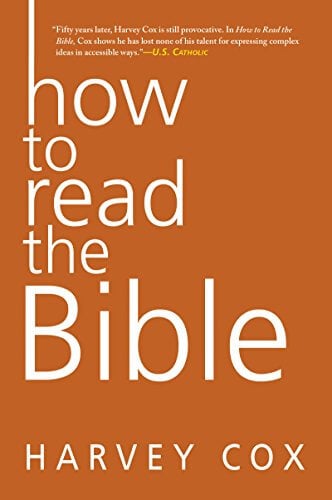
How to Read the Bible by Harvey Cox is an accessible, nuanced, and genuinely creative introduction to engaging with the best-selling and most influential single book in the world.
Which is a harder job than it sounds.
I’ve done a few deep dives into religion and religious history over the years (it was my minor in college). Karen Armstrong’s biography of the Bible is excellent. David Plotz’s humorous read through is fun & hilarious. Bart Ehrman’s work is sharp and worth your time as is Catherine Nixey’s. After working through Diarmaid MacCulloch’s massive Christianity: The First Three Thousand Years, and just watching the general drift of social discourse in America, I felt like it was time for another refresher — specifically on Christianity, still the dominant religion in America by a wide margin.
I picked up Harvey Cox mainly because I hadn’t read much of his work, even though he has a well-earned reputation for taking genuinely complex ideas and making them engaging without dumbing them down.
That skill turns out to be exactly what this book needs.
The Challenge of a Familiar Book
Here’s the problem with the Bible for a lot of readers: it’s too familiar.
So many of the stories, the characters, the passages — they’ve been absorbed through childhood, through church, through cultural osmosis. You stop actually reading them. You recognize them. That’s a very different thing.
It reminds me of the rare playwright or actor who can take a Shakespeare play that everyone has heard a hundred times and reframe it just enough that you’re suddenly thinking about it differently, pulling out insights you missed every time before. That’s what Cox does here. The stories haven’t changed. The lens has.
Cox’s Framework (Borrowed from Origen)
The heart of the book is a reading framework that Cox credits, with some honesty, to the early Christian theologian Origen — he essentially lifted it because it works.
The idea is that any given biblical text operates on multiple levels simultaneously, and collapsing it to just one is where most readers — and most arguments about the Bible — go wrong. Cox walks through four lenses:
- Genre — What kind of writing is this, actually? Poetry, law, history, apocalyptic vision, personal letter? The genre shapes everything about how you’re supposed to read it.
- Historical context — Who wrote this, when, and for whom? What was happening in the world at the time, and what problem was this text trying to solve for its original audience?
- Literal and metaphorical meaning — What does it say on the surface, and what might it be pointing toward beyond the surface?
- Allegorical and symbolic meaning — How has the tradition interpreted this passage, and what deeper theological or moral meaning has it carried across centuries?
None of these lenses are new on their own. What Cox does well is show how using all four together — rather than defaulting to whichever one confirms your existing take — opens up texts that might otherwise feel either too obvious or hopelessly opaque.
What I Liked
The accessibility. Cox writes clearly and moves quickly. This is not a dense academic text, and it’s not trying to be.
The framework itself. It’s genuinely useful, and I found myself applying it beyond the examples Cox uses in the book. That’s the mark of a good mental model.
The tone. Cox treats the Bible as a serious, layered, complicated piece of human and spiritual literature — not a weapon, not a relic, not a simple rulebook. That evenhandedness is refreshing given how charged these conversations tend to be.
What I Didn’t Like
For readers who have already done some work in this space — Armstrong, Ehrman, MacCulloch — Cox can feel a bit light. The framework is valuable, but the book doesn’t go especially deep on any single text or tradition. It’s a solid starting point, not a destination.
Bottom Line
If you’re looking for a way back into serious engagement with the Bible — whether you grew up with it, see it everywhere in culture, or just want to understand why it still matters so much to so many people — How to Read the Bible is a genuinely good place to start. Short, smart, and actually useful.
- Accessible without being dumbed down — Cox makes complex ideas genuinely engaging
- The four-lens framework is practical and useful well beyond the examples in the book
- Even-handed tone treats the Bible as serious literature rather than a rulebook or a relic
- Feels light for readers who have already done work in this space (Armstrong, Ehrman, MacCulloch, Pagels)
- Doesn't go especially deep on any single text or tradition

Get Posts Automagically
…also via RSS or Fediverse – just copy link & paste in your favorite reader :)