Best American Short Stories 2015

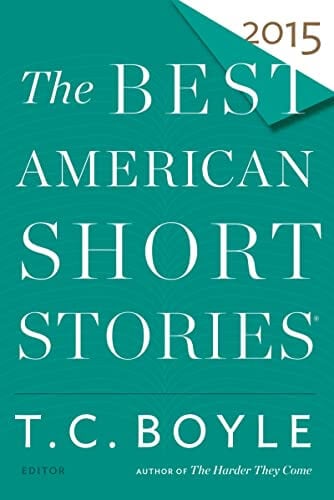
I picked up The Best American Short Stories 2015 at a used bookstore sale. The price was right, the premise was appealing – a curated collection of the best short fiction published that year – and I’ve always been curious about the short story as a format.
It was good. The stories were fine. But walking away from it, I had a clearer opinion about the format of the collection than the collection itself.
What I Liked
The short story form is genuinely impressive when it works. The constraint is the whole point – authors have to develop setting, character, and plot fast, and the best ones make it look effortless. Reading a strong anthology reminds you just how much craft that takes.
The 2015 edition delivers on that. There are some memorable pieces in here, and as a sampler of what literary short fiction looked like in a given year, it does its job.
What I Didn’t Like
The problem isn’t the writing – it’s the format of the anthology itself.
When you read twenty-odd stories from twenty-odd different authors, you’re constantly resetting. New world, new voice, new rules. Just as you start to settle into a writer’s sensibility, the story ends and you’re somewhere else entirely. Nothing accumulates.
I found that I couldn’t hold onto most of what I read. The stories didn’t stick the way novels do, or even the way a single-author collection does. And I think that’s structural, not a quality issue.
Compare that to reading Florida by Lauren Groff, or Flannery O’Connor’s collected stories — who I’d argue is the absolute master of the short story form — or Murakami’s story collections, or Camus. Even though each individual story is compact and self-contained, reading them together pulls you into a coherent world. You get the author’s obsessions, their recurring imagery, the way they think. The constraints of the short story stop feeling like limitations and start feeling intentional.
A mixed anthology doesn’t give you that. You get breadth, but not depth.
Takeaway
Here’s what I should have done with this book: used it as a discovery tool. Read through, flagged the authors whose stories grabbed me, then gone and found their collections.
That’s actually the right way to use an anthology like this. It’s a sampler, not a destination. If you pick up Best American Short Stories hoping to come away with a satisfying reading experience, you might be disappointed. But if you treat it as a scouting mission for authors worth investing more time in – that’s where the real value is.
The Best American Short Stories 2015 is a solid collection, but the mixed-anthology format works against it — too many voices, not enough accumulation. The real insight is using it as a discovery tool: find the authors whose stories grab you, then go read their full collections. If you already have a short story author in mind, skip straight to them instead.
- Showcases impressive craft and the unique demands of the short story format
- Useful as a scouting tool for finding new authors worth reading
- Good sampler of where literary short fiction was in 2015
- Constant voice-switching makes it hard to retain what you read
- Lacks the coherence and depth of a single-author collection
- Stories don't accumulate into a satisfying overall experience